
No fluff, no fifty tabs open at once just the stitches that matter and how to actually learn them.
I still remember my first attempt at crochet. I’d watched exactly one YouTube video, bought yarn in a color I liked way more than I understood, and sat down convinced I’d have a scarf by dinner. Two hours later I had a lumpy, tangled triangle that bore no resemblance to anything, and I was seriously questioning whether “hobby” and “crochet” belonged in the same sentence.
Here’s what nobody told me: crochet isn’t hard. It’s just unfamiliar. Every single pattern you’ll ever make from a simple dishcloth to an intricate lace shawl — is built from a small handful of basic stitches, repeated and combined in different ways. Learn those stitches properly, and the rest of crochet stops feeling like a foreign language and starts feeling like building blocks.
That’s exactly what this guide is for. We’re not going to overwhelm you with thirty advanced techniques. We’re going to walk through the essential stitches every beginner actually needs, in the order that makes sense, with honest tips about what trips people up.
Table of Contents
Key Takeaways
- Every crochet project starts with just two moves: a slip knot and a chain stitch.
- Six stitches chain, slip stitch, single crochet, half double crochet, double crochet, and treble crochet cover the vast majority of beginner and intermediate patterns.
- Single crochet is the easiest stitch to learn first because it’s slow, dense, and forgiving of mistakes.
- You can finish a real, usable project (like a coaster or washcloth) in under an hour once you know just two stitches.
- Consistent tension not speed is what separates “beginner” work from “polished” work, and it only comes with repetition.
What’s the Easiest Crochet Stitch for a Beginner?
If you ask ten experienced crocheters this question, nine of them will say the same thing: single crochet. Here’s why it earns that reputation. It’s short, it’s dense, and it happens slowly enough that you can actually see and correct your mistakes before they multiply. Taller stitches like double or treble crochet move faster, which sounds appealing until you realize “faster” also means “faster to mess up.”
But before single crochet, there are two things you genuinely can’t skip:
1. The Slip Knot Foundation
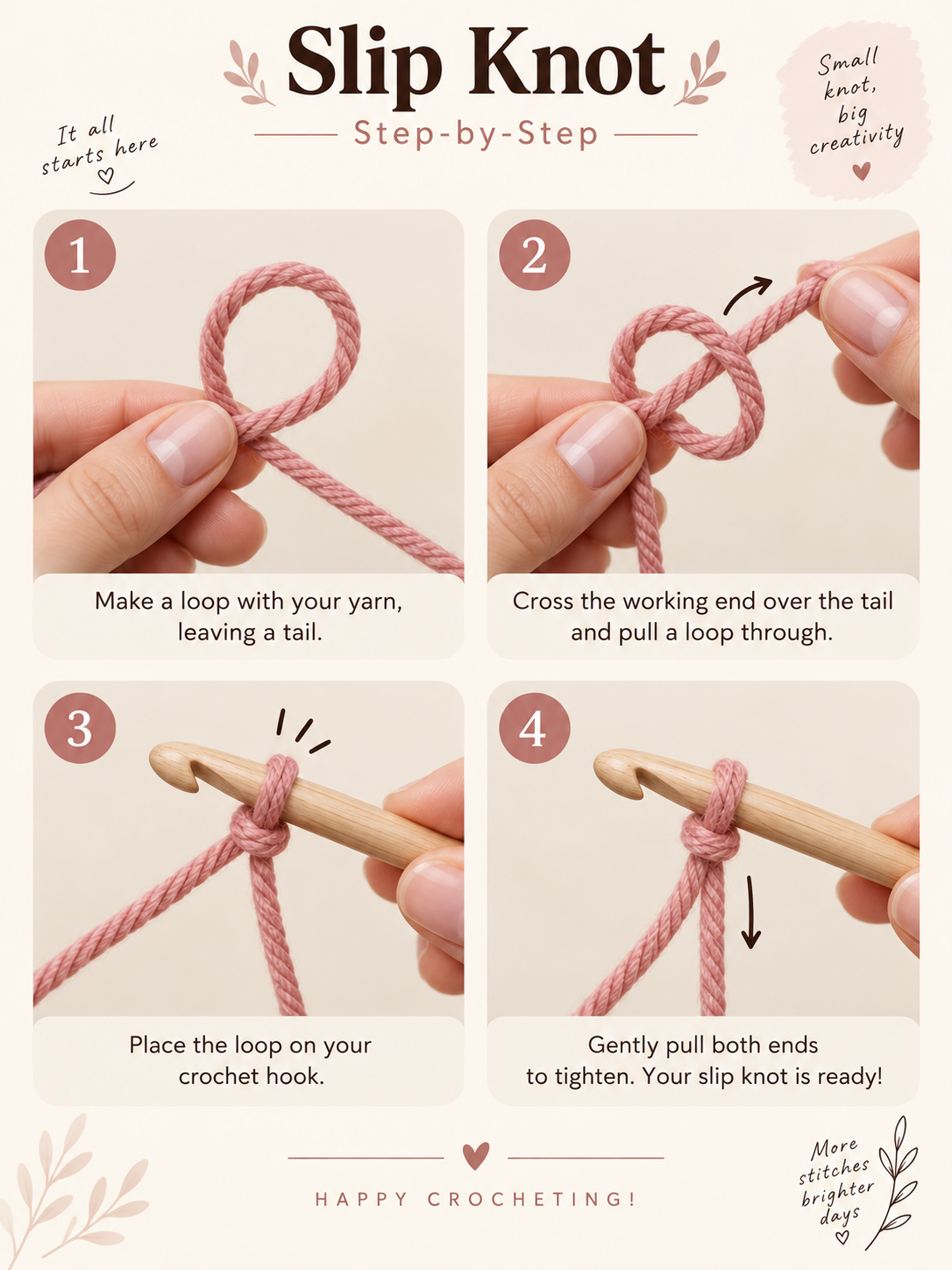
This is the loop that goes onto your hook to start everything. It’s not technically a “stitch,” but it’s the doorway into every single project you’ll ever make. Practice tying it a few times before you even pick up a hook muscle memory here saves frustration later.
2. The Chain Stitch (ch) Foundation
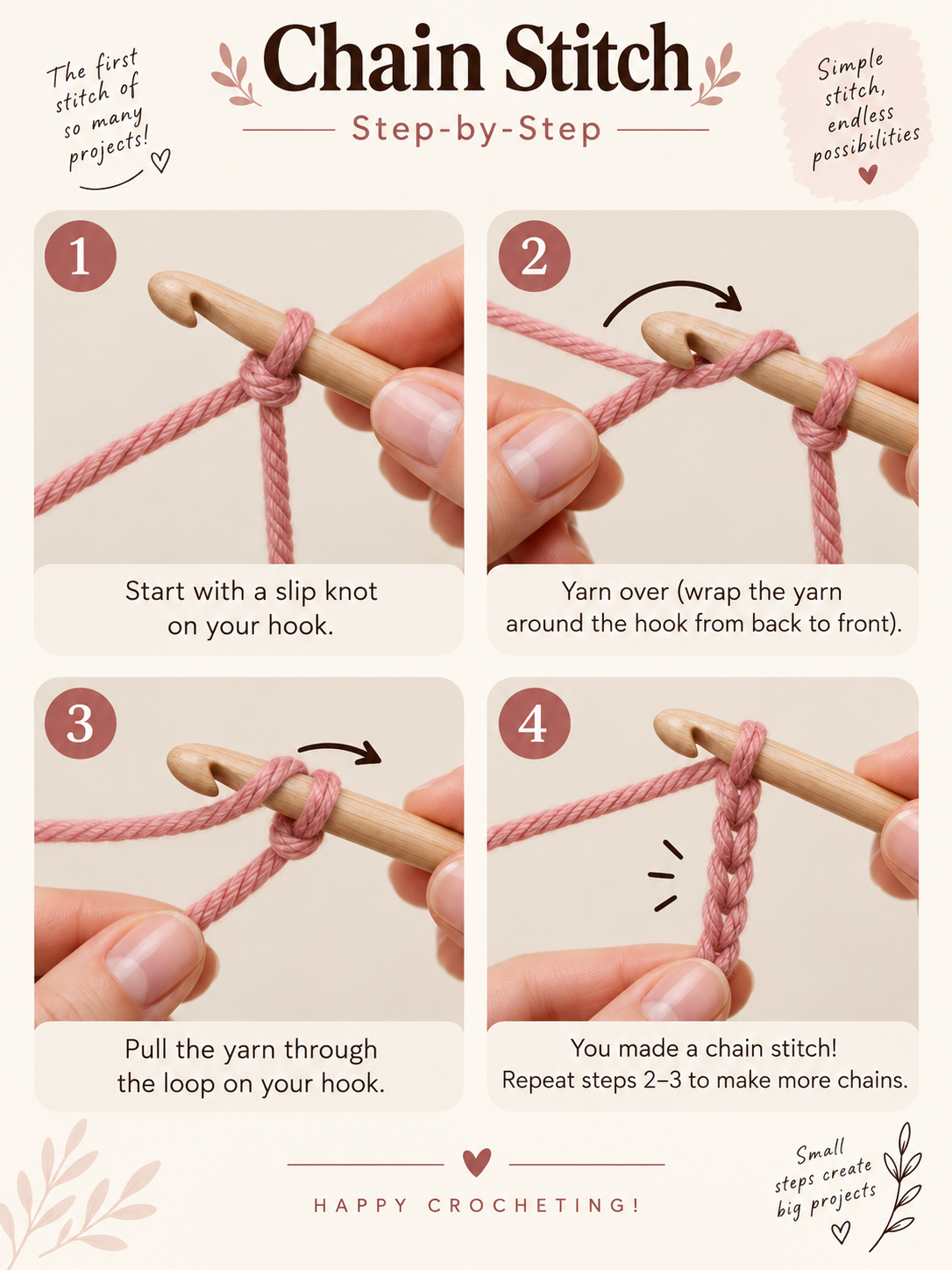
The chain stitch is, quite literally, the backbone of crochet. Almost every pattern begins with a “foundation chain” a row of chain stitches that everything else gets built onto. It’s simple: yarn over, pull through the loop on your hook, repeat. The challenge isn’t the motion, it’s keeping your tension even so your chain isn’t a mix of tight and loopy stitches. Don’t worry if your first chain looks a little wobbly that’s completely normal, and it evens out fast.
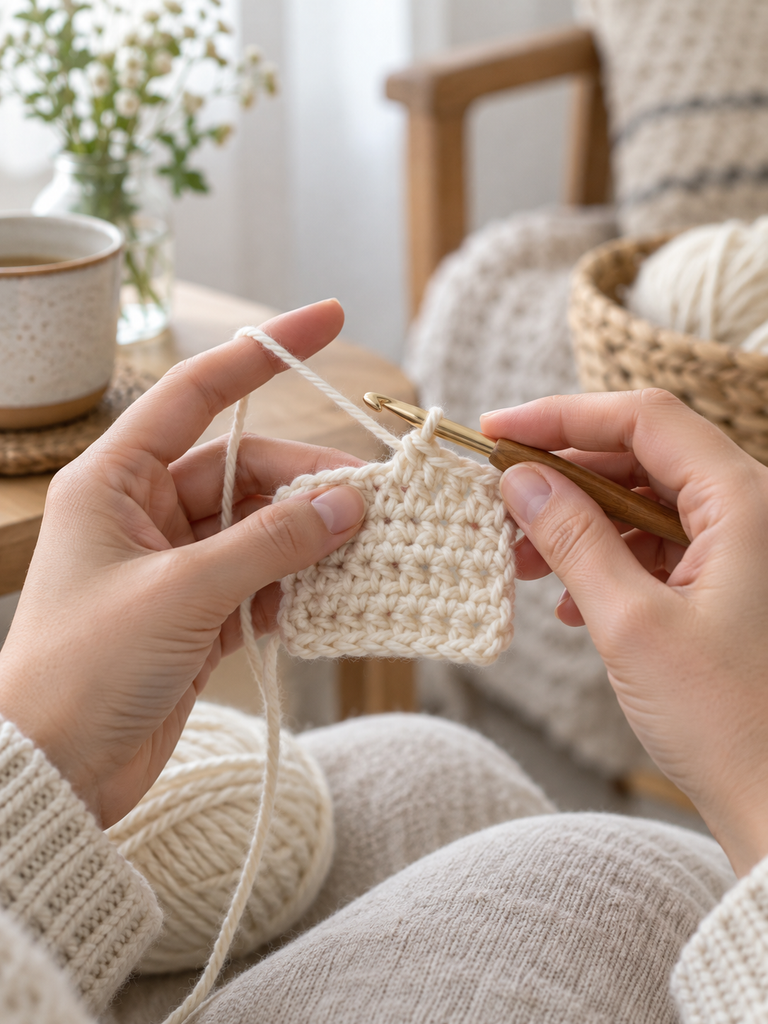
Once you’re comfortable chaining, single crochet is your natural next step and honestly, the first thing most beginners should actually crochet is a simple single-crochet square. Not a scarf, not a hat. A square. It sounds unglamorous, but it teaches you tension, turning, and consistency without the pressure of “ruining” a real project.
The Essential Stitches Every Beginner Needs to Know
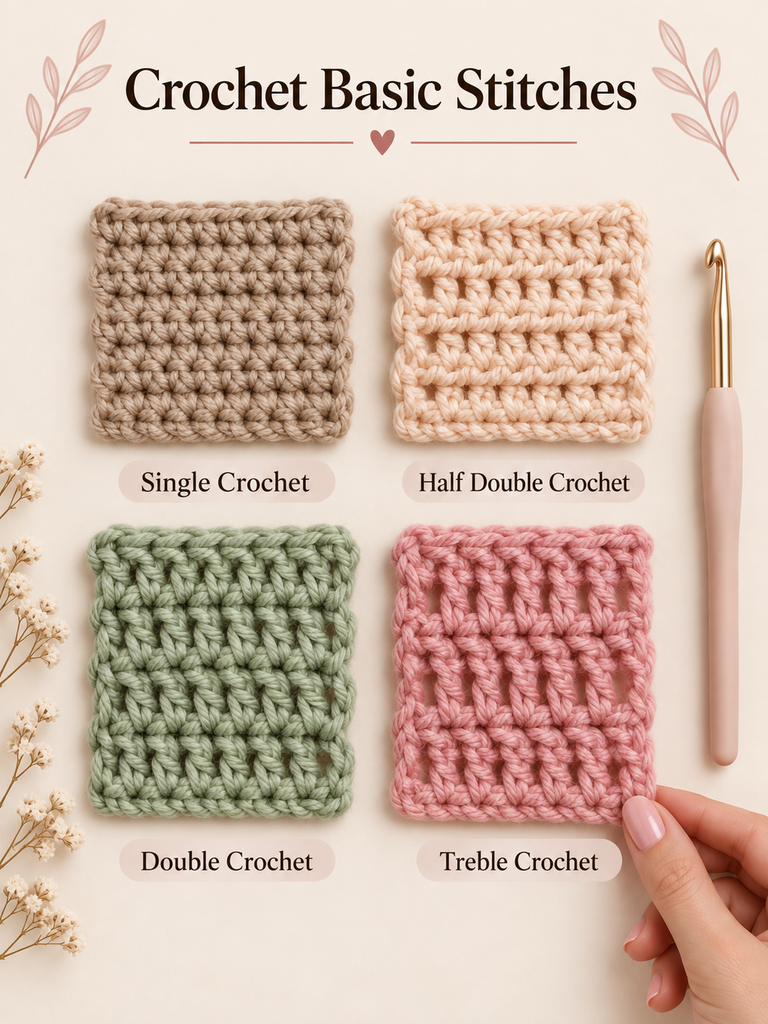
You’ll see this list phrased differently across the internet some call it “the 6 basic stitches,” others stretch it to 10 by including techniques and shapes like granny squares. Here’s the honest truth: there are really six core stitches that everything else builds from. Learn these, and you can read almost any beginner or intermediate pattern.
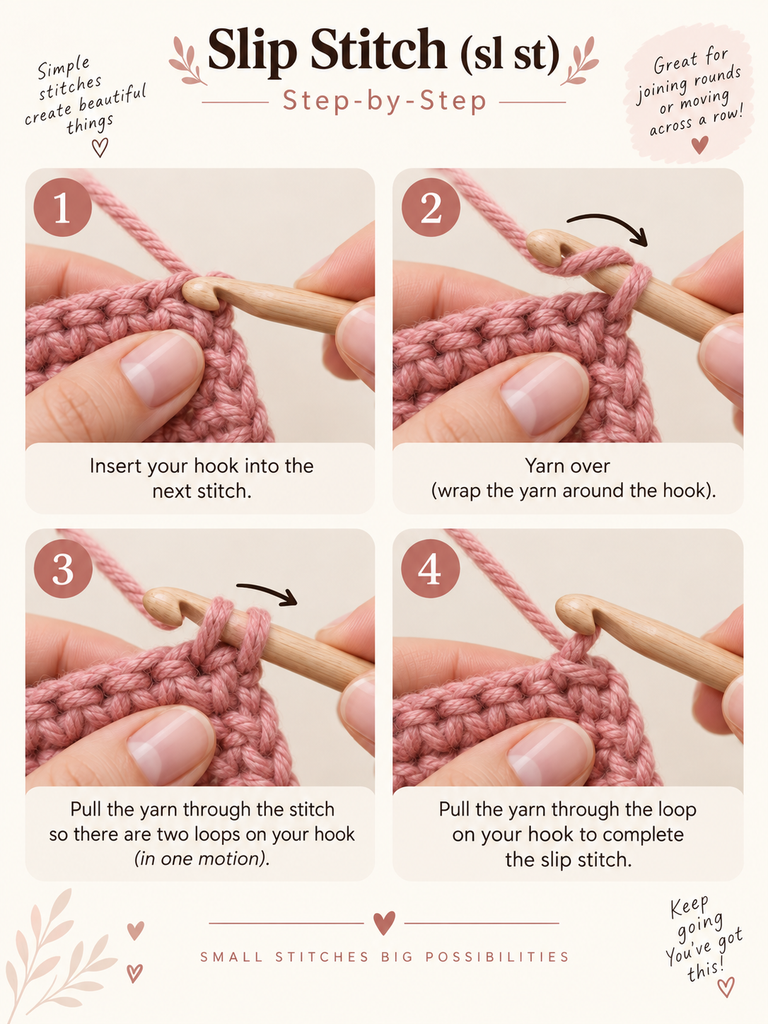
Slip Stitch (sl st) Technique
Less a “stitch” and more a tool it’s mainly used to join rounds, move your hook across a row without adding height, or finish off an edge neatly. You won’t use it to build fabric on its own, but you’ll reach for it constantly.
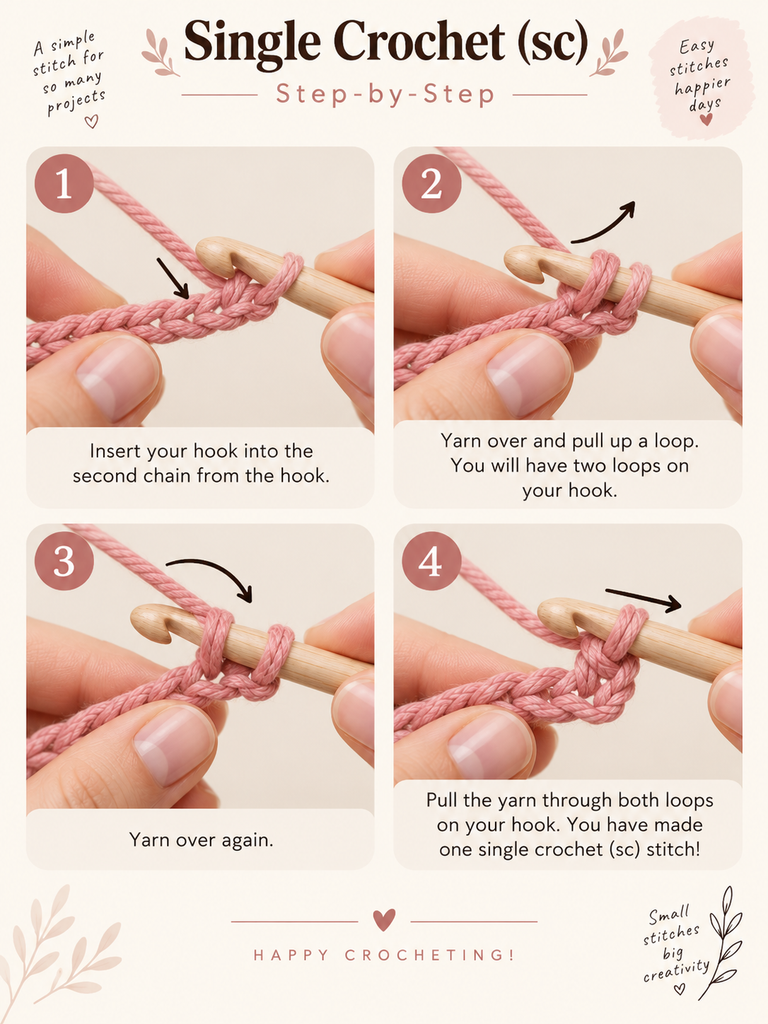
Single Crochet (sc) Start here
Short, dense, and sturdy. This creates a tight fabric with almost no gaps, which makes it ideal for things like coasters, dishcloths, amigurumi (stuffed toys), and anything that needs to hold its shape.
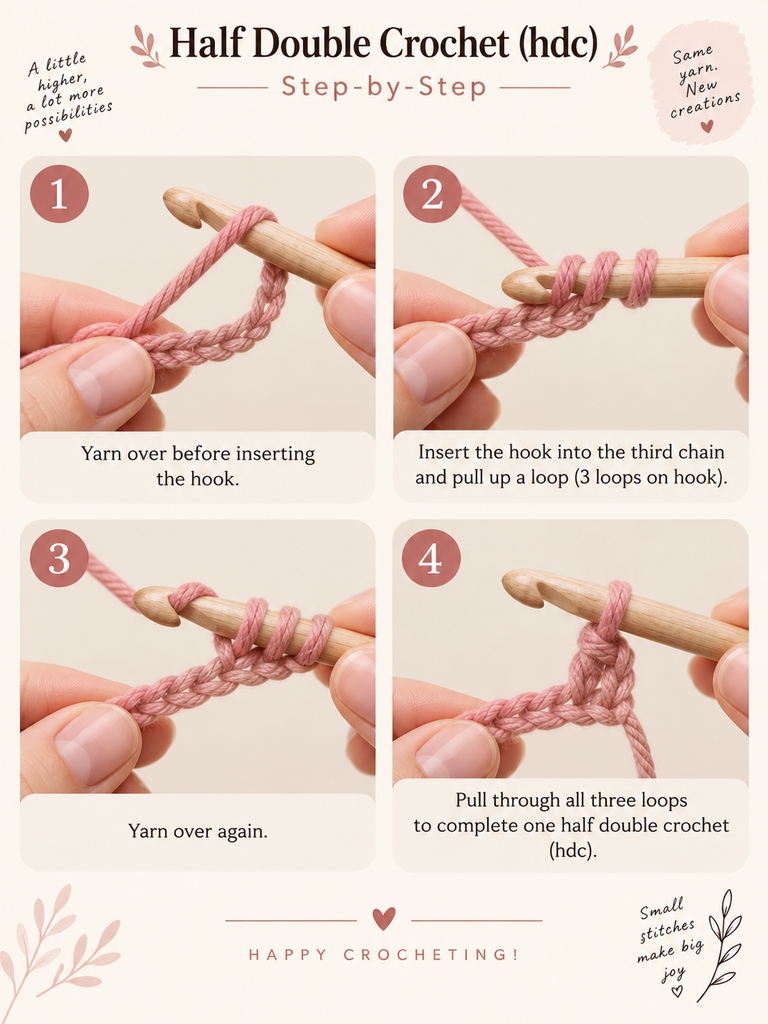
Half Double Crochet (hdc) Next step
A little taller than single crochet, a little softer in drape. This is the sweet spot a lot of crocheters land on for blankets and scarves it works up faster than single crochet without turning into a loose, gappy fabric.
Double Crochet (dc) Popular
Taller again, with more visible open texture. This is the workhorse stitch behind countless granny squares, afghans, and quick-finish blankets. If you’ve ever wondered how experienced crocheters finish a blanket in a weekend, double crochet is usually the answer.
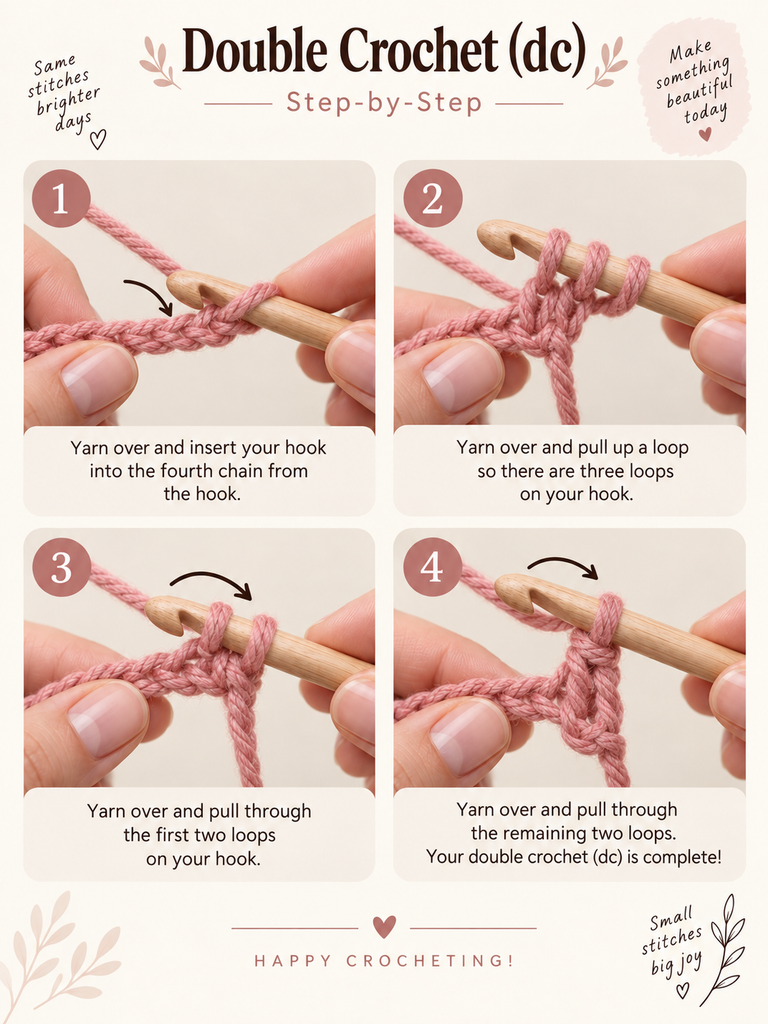
Treble/Triple Crochet (tr) Advanced-beginner
The tallest of the basic stitches, producing an open, lacy fabric. You’ll see this in doilies, summer wraps, and anything designed to feel light rather than dense.
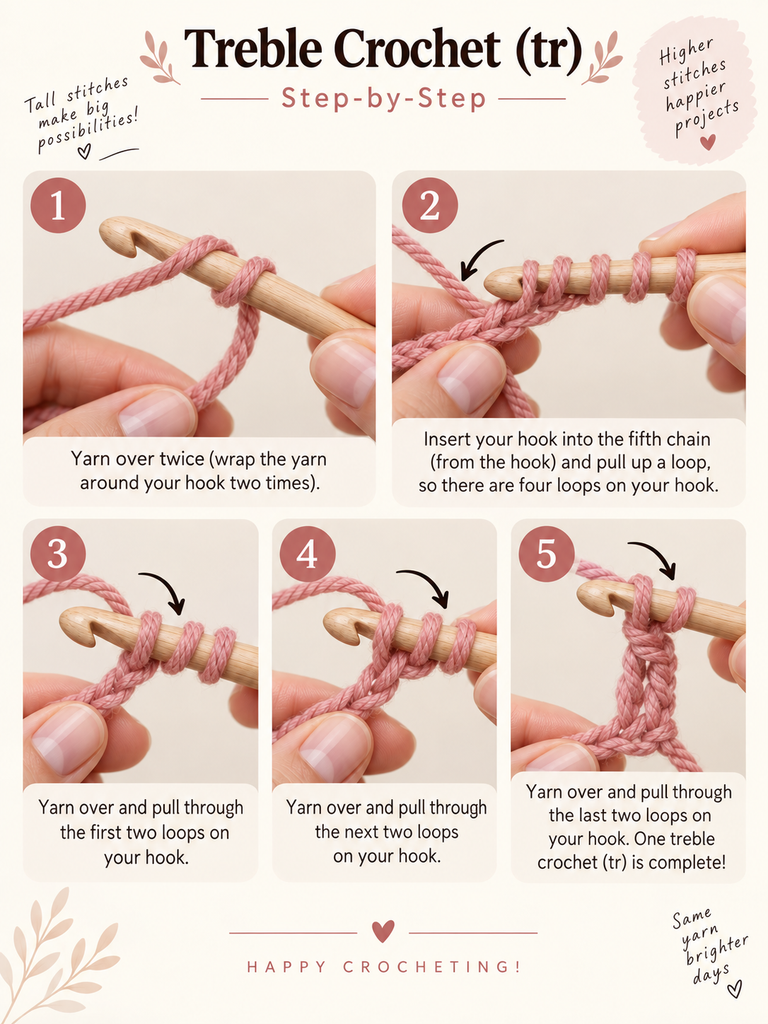
A helpful way to remember the order: each stitch is built from the one before it, with one extra “yarn over, pull through” step added. Once that clicks, the whole family of stitches stops feeling like separate things to memorize.
Beyond these six, you’ll eventually run into “shape” stitches like the granny square (clusters of double crochet worked in a circle) and decorative stitches like the shell stitch or V-stitch. But those are combinations of the six basics above not new skills to learn from scratch.
What Can You Actually Make While You’re Still a Beginner?
This is the question that matters most, because motivation dies fast when you’re stuck practicing stitches on a scrap of yarn with nothing to show for it. Good news: you don’t need to be “good” to make something real.
In 20 minutes
A single-crochet coaster or a small granny square. Genuinely with just chain stitch and single crochet, you can produce something functional before your tea gets cold.
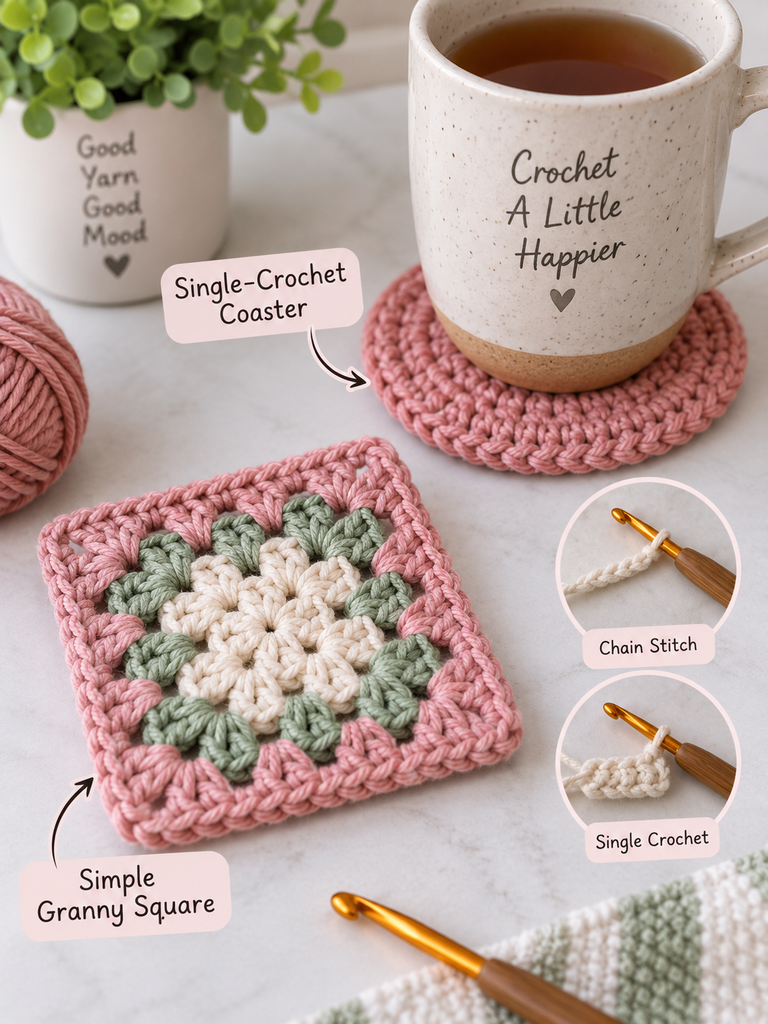
In about an hour
A washcloth, a small drawstring pouch, or a simple headband using single or double crochet. These projects are forgiving of uneven tension because the finished item doesn’t need to be perfectly symmetrical to work.
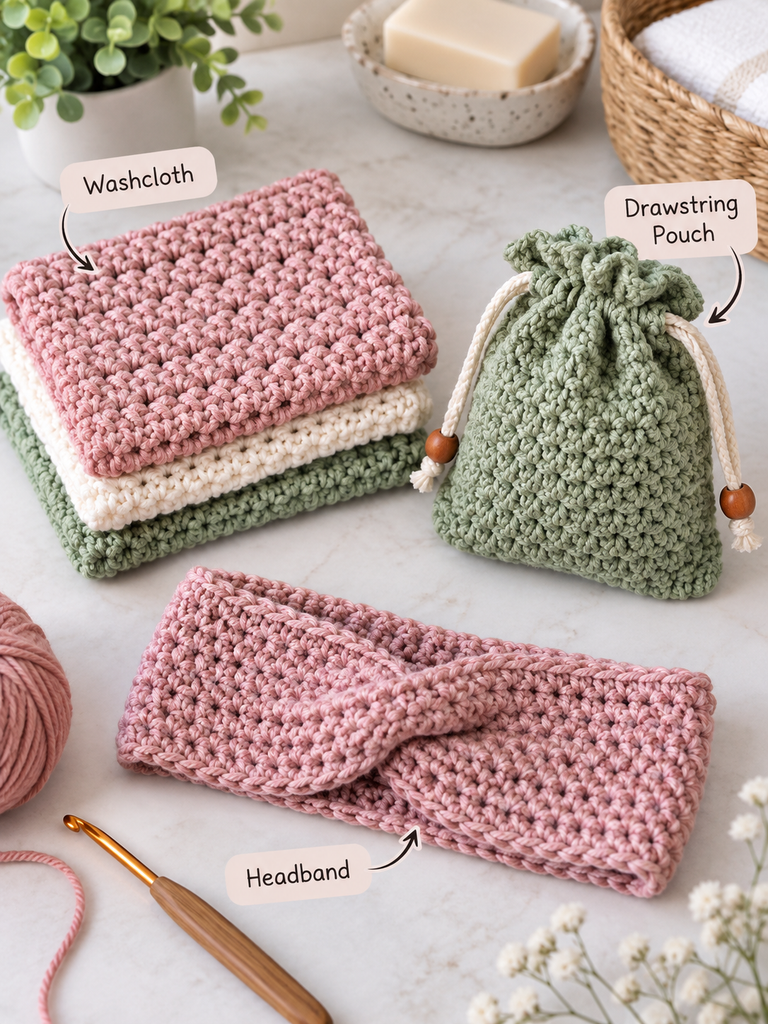
Your first “real” project
Once single crochet feels natural, a scarf using half double or double crochet is the classic next step. It’s long enough to practice consistency over time, simple enough not to require shaping, and useful enough that you’ll actually wear it.
Common Beginner Questions, Answered Honestly
Do I need to learn all six stitches before starting a project? No and honestly, you shouldn’t try to. Learn chain and single crochet, make something small, then add one new stitch per project. You’ll retain far more this way than by drilling stitches in isolation.
Why does my tension look so different from the tutorial? Because everyone’s grip, yarn choice, and hook comfort is different this evens out with practice, not with a “correct” way of holding your hook. Give it a dozen rows before judging your consistency.
Is it normal to unravel (frog) a project multiple times as a beginner? Constantly, and every experienced crocheter has done it more times than they’d like to admit. It’s not failure it’s how tension and muscle memory actually develop.
Your Turn: Start With One Square
Here’s my honest, no-nonsense advice: don’t try to learn all six stitches this week. Pick up a hook, some cheap worsted-weight yarn, and just practice a chain and a row of single crochet until it feels boring. Boring is good boring means it’s becoming automatic. Then add double crochet. Then make something small and real.
Crochet rewards patience over talent. Nobody starts with even tension and perfect stitches — they start with a lumpy triangle, just like I did, and they keep going anyway.
Ready to Pick Up Your Hook?
Grab a skein of yarn and a hook, practice your first chain today, and drop a comment below with how it goes or share a photo of your first (wonderfully imperfect) project. We’d genuinely love to see it.