
I still remember my first trip to the craft store as a brand-new crocheter. I walked in with a vague idea and walked out twenty minutes later with a fuzzy black eyelash yarn, a hook that turned out to be the wrong size, and absolutely no idea why my first chain looked like a tangled shoelace.
Spoiler: it wasn’t my hands. It was my supplies.
The good news? Crochet is one of the cheapest hobbies you can pick up. You don’t need a fancy kit or a cupboard full of gadgets. You need a handful of the right things. In this guide, I’ll walk you through each one, explain why it matters, and tell you honestly what can wait until later.
Table of Contents
Key Takeaways
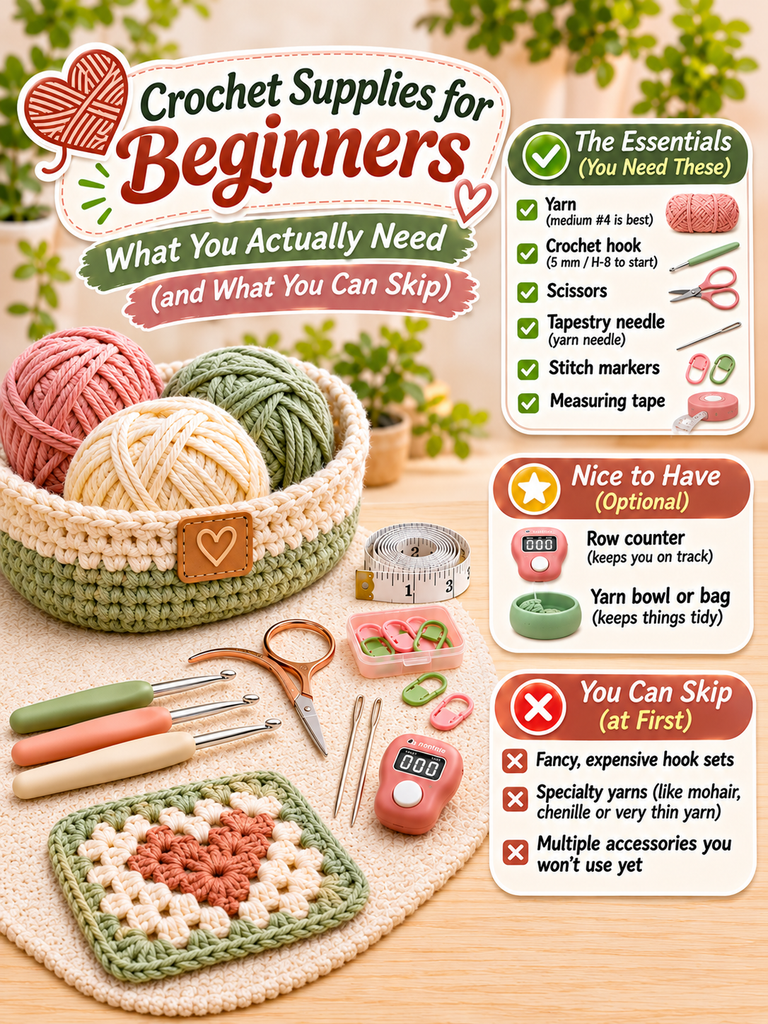
- Your first hook should be a 5 mm (US H-8), ideally with an ergonomic handle.
- Start with medium-weight (#4 worsted) yarn in a smooth texture and a light, solid color.
- Scissors, a tapestry needle and stitch markers complete your true essentials.
- Specialty tools like blocking mats, yarn swifts and big hook sets can wait.
- A solid beginner setup costs far less than most people expect.
1. The Crochet Hook: Your Most Important Tool
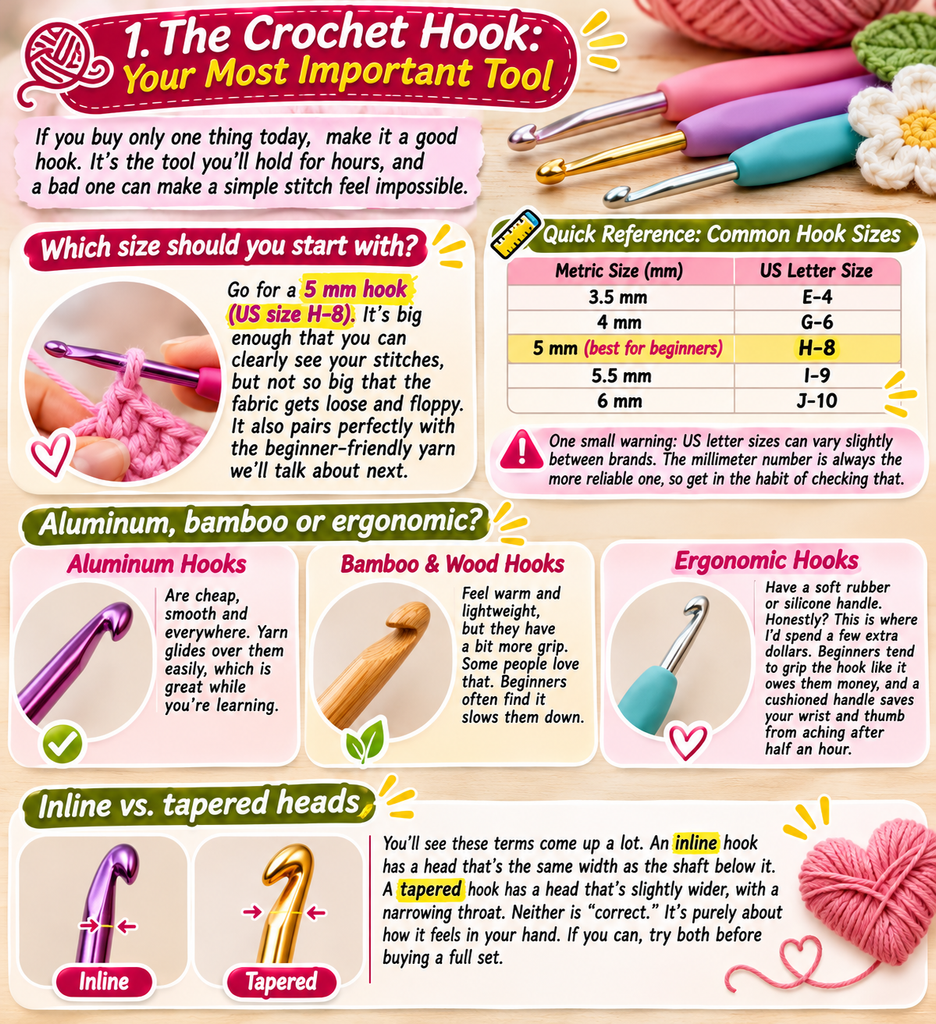
If you buy only one thing today, make it a good hook. It’s the tool you’ll hold for hours, and a bad one can make a simple stitch feel impossible.
Which size should you start with?
Go for a 5 mm hook (US size H-8). It’s big enough that you can clearly see your stitches, but not so big that the fabric gets loose and floppy. It also pairs perfectly with the beginner-friendly yarn we’ll talk about next.
Here’s a quick reference for the sizes you’ll see most often:
- 3.5 mm – US E-4
- 4 mm – US G-6
- 5 mm – US H-8 (best for beginners)
- 5.5 mm – US I-9
- 6 mm – US J-10
One small warning: US letter sizes can vary slightly between brands. The millimeter number is always the more reliable one, so get in the habit of checking that.
Aluminum, bamboo or ergonomic?
Aluminum hooks are cheap, smooth and everywhere. Yarn glides over them easily, which is great while you’re learning.
Bamboo and wood hooks feel warm and lightweight, but they have a bit more grip. Some people love that. Beginners often find it slows them down.
Ergonomic hooks have a soft rubber or silicone handle. Honestly? This is where I’d spend a few extra dollars. Beginners tend to grip the hook like it owes them money, and a cushioned handle saves your wrist and thumb from aching after half an hour.
Inline vs. tapered heads
You’ll see these terms come up a lot. An inline hook has a head that’s the same width as the shaft below it. A tapered hook has a head that’s slightly wider, with a narrowing throat. Neither is “correct.” It’s purely about how it feels in your hand. If you can, try both before buying a full set.
2. Yarn: Where Most Beginners Go Wrong
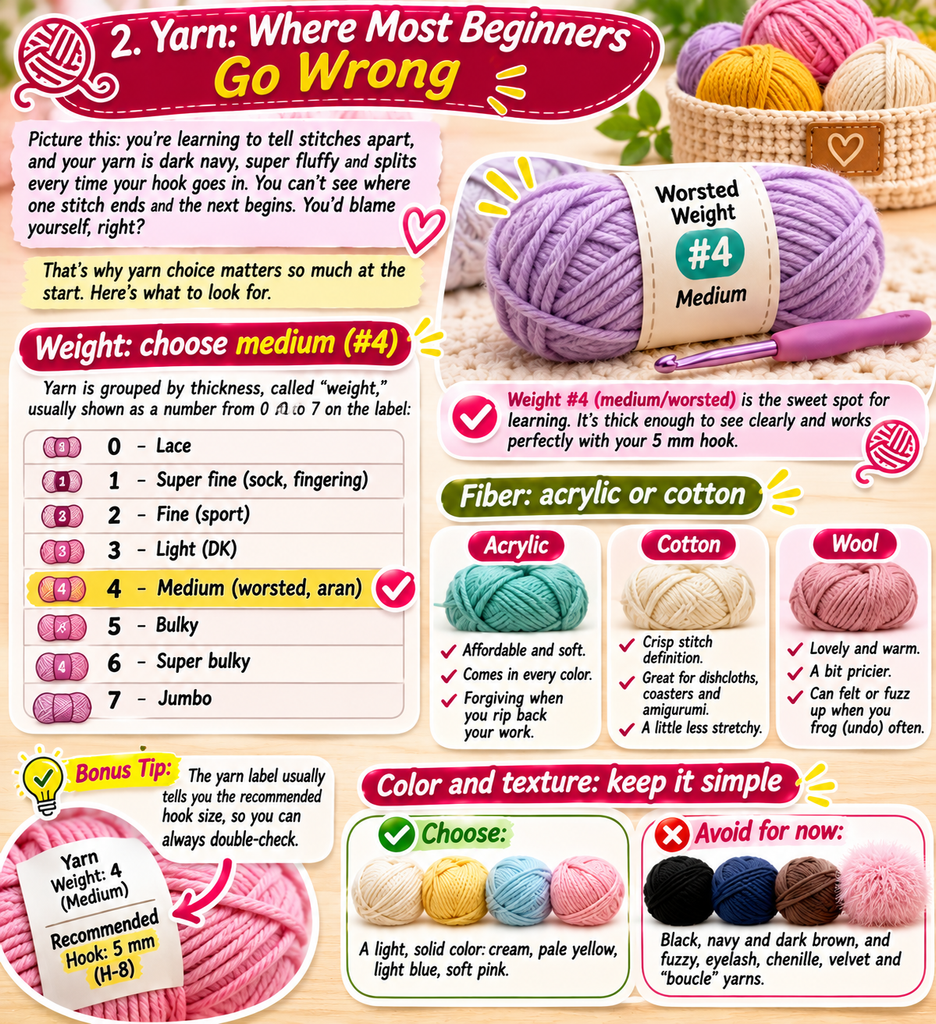
Picture this: you’re learning to tell stitches apart, and your yarn is dark navy, super fluffy and splits every time your hook goes in. You can’t see where one stitch ends and the next begins. You’d blame yourself, right?
That’s why yarn choice matters so much at the start. Here’s what to look for.
Weight: choose medium (#4)
Yarn is grouped by thickness, called “weight,” usually shown as a number from 0 to 7 on the label:
- 0 – Lace
- 1 – Super fine (sock, fingering)
- 2 – Fine (sport)
- 3 – Light (DK)
- 4 – Medium (worsted, aran)
- 5 – Bulky
- 6 – Super bulky
- 7 – Jumbo
Weight #4 (medium/worsted) is the sweet spot for learning. It’s thick enough to see clearly and works perfectly with your 5 mm hook. Bonus: the label usually tells you the recommended hook size, so you can always double-check.
Fiber: acrylic or cotton
Acrylic is affordable, soft, comes in every color imaginable, and forgives you when you rip back your work (and you will, many times, and that’s completely normal).
Cotton has crisp stitch definition and is perfect for dishcloths, coasters and amigurumi. It’s a little less stretchy, so your hands may work slightly harder.
Wool is lovely, but save it for a bit later. It’s pricier, and some types felt or fuzz up when frogged repeatedly.
Color and texture: keep it simple
Choose a light, solid color: cream, pale yellow, light blue, soft pink. Avoid black, navy and dark brown for now. Also steer clear of fuzzy, eyelash, chenille, velvet and “boucle” yarns. They’re gorgeous, but trying to find your stitches in them is like reading in the dark.
A smooth, tightly twisted yarn is your best friend in the first few weeks.
3. The Small Tools That Make a Big Difference
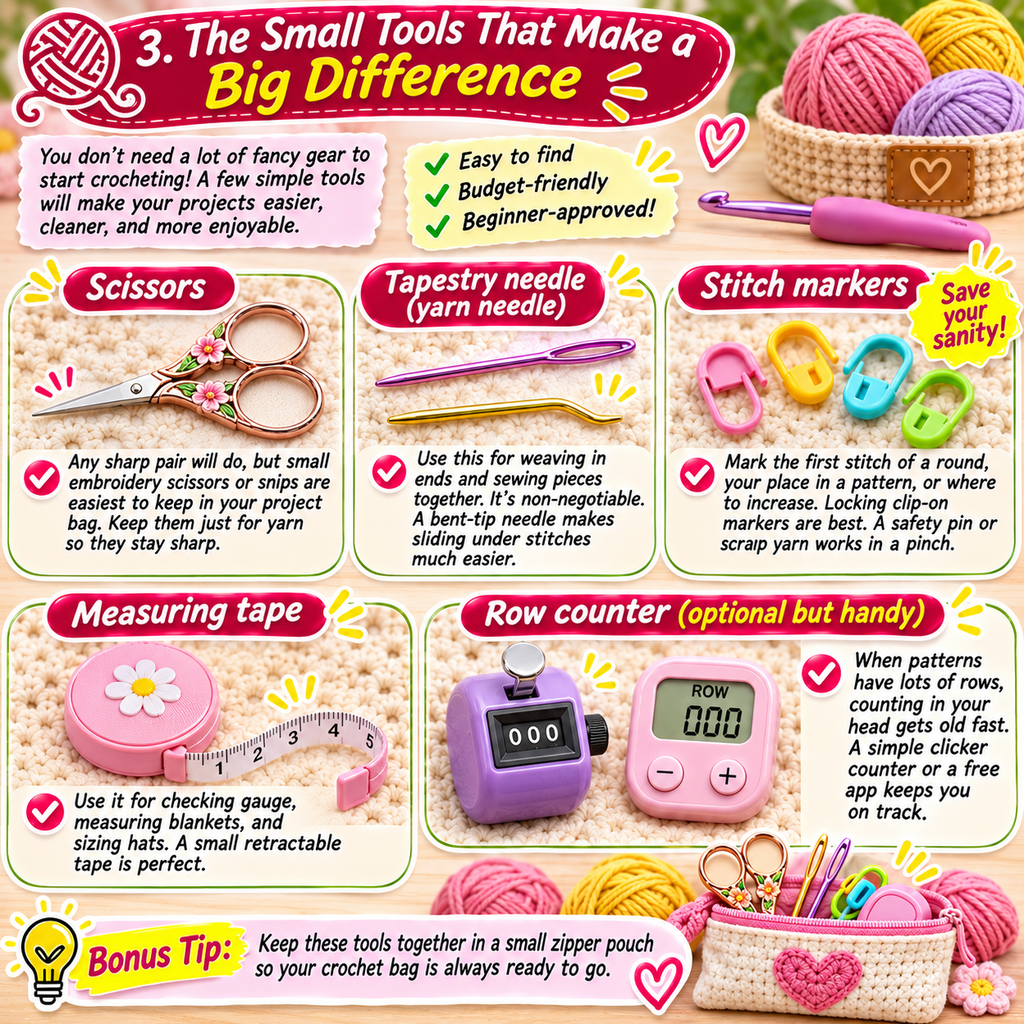
Scissors
Any sharp pair will do, but a small pair of embroidery or snips makes life easier, and fits in a project bag. Keep them just for yarn so they stay sharp.
Tapestry needle (yarn needle)
This is a blunt, large-eyed needle for weaving in your ends and sewing pieces together. It’s non-negotiable. Without it, your finished projects will slowly unravel. Get a pack with a bent-tip needle included. That little angle makes sliding under stitches so much easier.
Stitch markers
Here’s the thing nobody tells you: stitch markers will save your sanity. They mark the first stitch of a round, your place in a pattern, or a spot where you need to increase. Locking (clip-on) markers are the most useful for crochet. In a pinch, a safety pin or a scrap of contrast yarn works too.
Measuring tape
You’ll need it for checking gauge, measuring blankets and sizing hats. A small retractable one is perfect.
Row counter (optional but handy)
Once you start following patterns with lots of rows, counting in your head gets old fast. A simple clicker counter or a free counter app keeps you on track.
4. Supplies for Specific Projects
Once you’ve got the basics down, you’ll probably fall in love with a specific type of project. Here’s what to add depending on where your hook takes you.
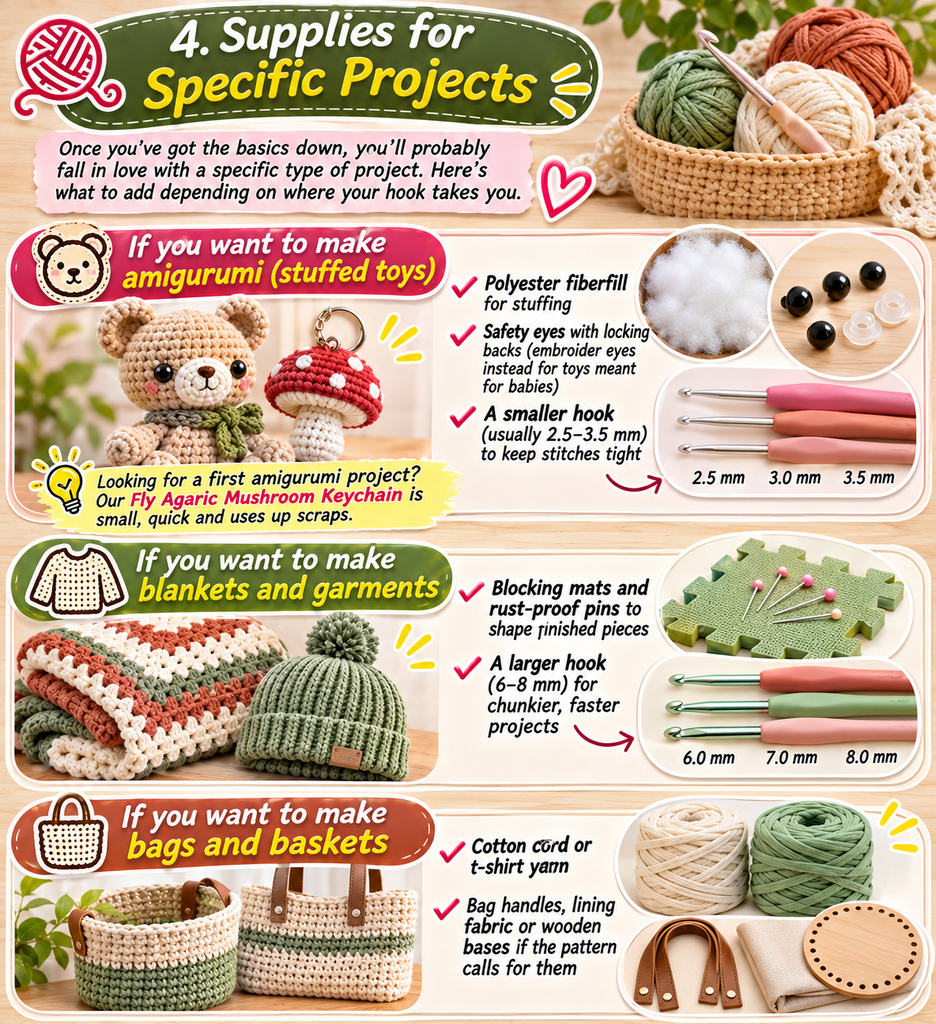
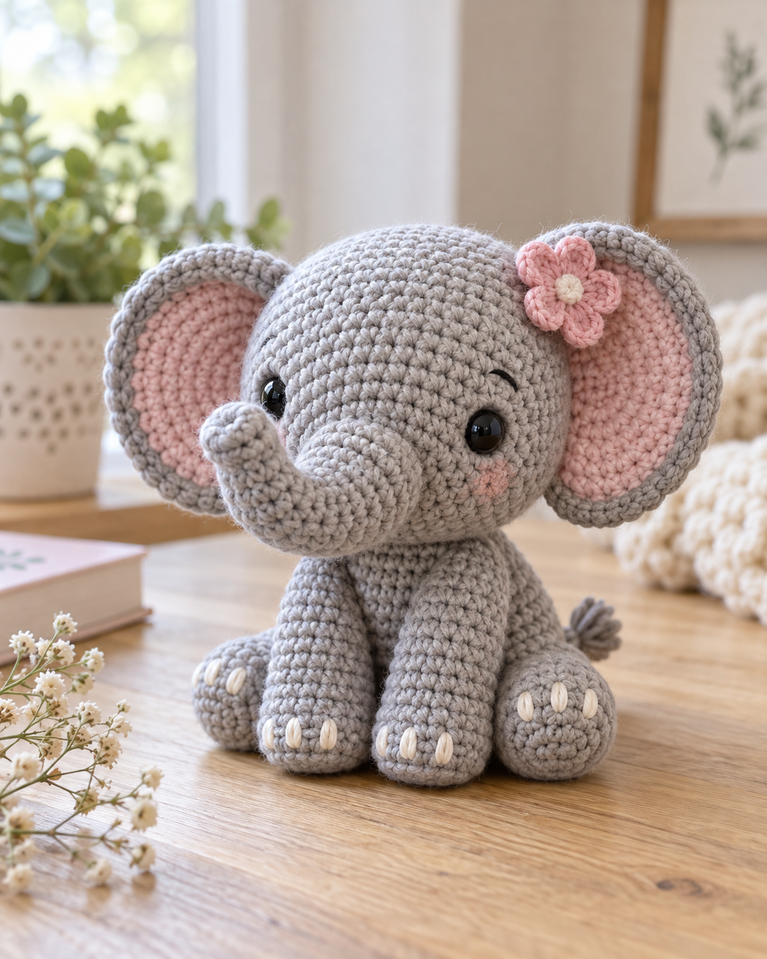
If you want to make amigurumi (stuffed toys)
- Polyester fiberfill for stuffing
- Safety eyes with locking backs (embroider eyes instead for toys meant for babies)
- A smaller hook (usually 2.5–3.5 mm) to keep stitches tight
Looking for a first amigurumi project? Our Fly Agaric Mushroom Keychain is small, quick and uses up scraps.
If you want to make blankets and garments
- Blocking mats and rust-proof pins to shape finished pieces
- A larger hook (6–8 mm) for chunkier, faster projects
If you want to make bags and baskets
- Cotton cord or t-shirt yarn
- Bag handles, lining fabric or wooden bases if the pattern calls for them
What You Can Safely Skip (For Now)
Let’s be honest: the craft industry is very good at making beginners feel underprepared. You don’t need any of these on day one:
- A 20-piece hook set. You’ll use two of them. Buy hooks as patterns call for them.
- A yarn swift and ball winder. Only useful if you buy yarn in hanks. Most beginner yarn comes in ready-to-use skeins.
- Expensive hand-dyed yarn. Save it for when you can enjoy it without frogging it five times.
- Pre-packaged “complete” kits. They often bundle a poor-quality hook with yarn you’d never choose. Building your own small kit usually costs less and works better.
Your Simple Beginner Crochet Kit Checklist
- One 5 mm (H-8) hook, ergonomic if possible
- Two or three skeins of #4 medium acrylic or cotton in light, solid colors
- Small sharp scissors
- A pack of tapestry needles
- A handful of locking stitch markers
- A measuring tape
- A pouch or zip bag to keep it all together
That’s it. Seriously. Everything above fits in a pencil case and costs less than a dinner out.
A Few Tips Before You Start
Buy two skeins of the same yarn. One for practice swatches, one for your first real project. Colors can differ slightly between dye lots, so buying together keeps things matching.
Keep the yarn label. It tells you the weight, fiber, hook size and care instructions. Tuck it into your project bag.
Relax your grip. Tight hands make tight stitches, and tight stitches are hard to work into. If your hand hurts, put it down and shake it out.
Start with a flat project. A dishcloth or a simple scarf lets you practice the same stitch over and over. Amigurumi and garments are much more fun once the basic stitches feel natural.
Final Thoughts
Remember my fuzzy black eyelash yarn? It sat in a drawer for two years before I finally used it, as trim on a project made with a nice, smooth cream acrylic. By then, I knew what I was doing.
That’s really the whole lesson here. The right beginner supplies won’t make you a pro overnight, but they’ll take the frustration out of learning. You’ll be able to see your stitches, fix your mistakes, and actually enjoy the process. And once you’re hooked (sorry, couldn’t resist), there’s a whole world of yarn waiting for you.
What was the first thing you ever bought for crochet? A perfect starter hook, or a fluffy yarn mistake like mine? Share your story in the comments. And if you’re just starting out, drop your questions below. I’m always happy to help a new crocheter find their footing.