
There’s a particular kind of magic that happens the moment the air turns crisp and the trees start putting on their annual show. Around here, it’s the maple trees that steal the spotlight that unmistakable blaze of orange, red, and gold that makes you want to slow down, grab a warm drink, and start a cozy project with your hands.

That’s exactly how this pattern was born. A few years ago, I found myself staring at a maple leaf that had drifted onto my porch step, turning it over in my fingers, admiring those five perfect points. I thought: I bet I could make that in yarn. A few frogged attempts later (crochet talk for “ripped out and started over”), I landed on a version so simple that I now consider it one of the best first projects for anyone picking up a hook for the very first time.
If you’ve been searching for a quick, beautiful, no-fuss pattern to welcome autumn into your home, you’re in exactly the right place.
Table of Contents
Why the Maple Leaf Makes the Perfect Beginner Project
Before we get into the pattern itself, let’s talk about why this little leaf works so well for new crocheters.
Maple leaves are instantly recognizable that star-like, five-pointed silhouette is one of nature’s most elegant designs, which is exactly why it’s the national symbol of Canada and shows up on everything from flags to coins to coffee cups every October. But here’s the beginner-friendly secret: underneath that intricate-looking shape is one of the most repetitive, forgiving stitch patterns in crochet. Once you learn how to make one point, you’re just repeating the same few steps four more times.
That’s why this project checks so many boxes people search for when they’re starting out:
- It’s fast. A single leaf can realistically be finished in about 20–30 minutes once you get into the rhythm perfect if you’re looking for something you can complete in under an hour.
- It teaches real skills. You’ll practice chains, slip stitches, double crochet, and treble crochet the core stitches you’ll use in nearly every future project.
- It’s satisfying immediately. Unlike a blanket or sweater that takes weeks, you get a finished, giftable object in one sitting.
- It’s genuinely useful. Make one and you have a coaster or ornament. Make a dozen and you have a garland, a wreath accent, or a bowl of seasonal decor.
A quick fun fact while we’re on the subject: maple leaves are sometimes confused with sycamore or plane tree leaves, since both have that lobed, pointed shape. The easiest way to tell them apart? Maple leaves grow in pairs directly opposite each other on the stem, while sycamore leaves alternate. Not that your yarn version needs to fool a botanist but it’s a fun bit of trivia to share while you crochet.
What You’ll Need
This pattern uses minimal materials, which is part of why it’s such an accessible starting project.
- Yarn: Worsted weight (medium, #4) yarn in your favorite autumn shade think burnt orange, deep red, golden yellow, or a rustic brown
- Hook: 4.5mm (US 7) or 5mm (US H-8) crochet hook, whichever gives you a comfortably firm fabric
- Scissors
- Yarn needle (for weaving in ends)
- Optional: Stiffening spray or a mixture of glue and water, if you want your leaves to hold a firm, non-floppy shape (great for garlands or wreaths)
- Optional: A small piece of floral wire, if you want to bend and shape the leaf like a real one
That’s it. No fancy tools, no complicated notions just yarn, a hook, and about half an hour of your time.
Stitches Used
- Ch – Chain
- Sl st – Slip stitch
- Dc – Double crochet
- Tr – Treble (triple) crochet
- Dc2tog – Double crochet two stitches together (decrease)
If any of these are new to you, it’s worth watching a quick one-minute tutorial video for each before you begin this pattern is a wonderful place to practice them because the repetition builds muscle memory fast.
The Pattern: Easy Crochet Maple Leaf
Note: This pattern is worked in one continuous piece, starting from the center and building outward into five points, then finishing with the stem. Gauge isn’t critical here a slightly bigger or smaller leaf just means a slightly bigger or smaller decoration.
Step 1: Start the Center
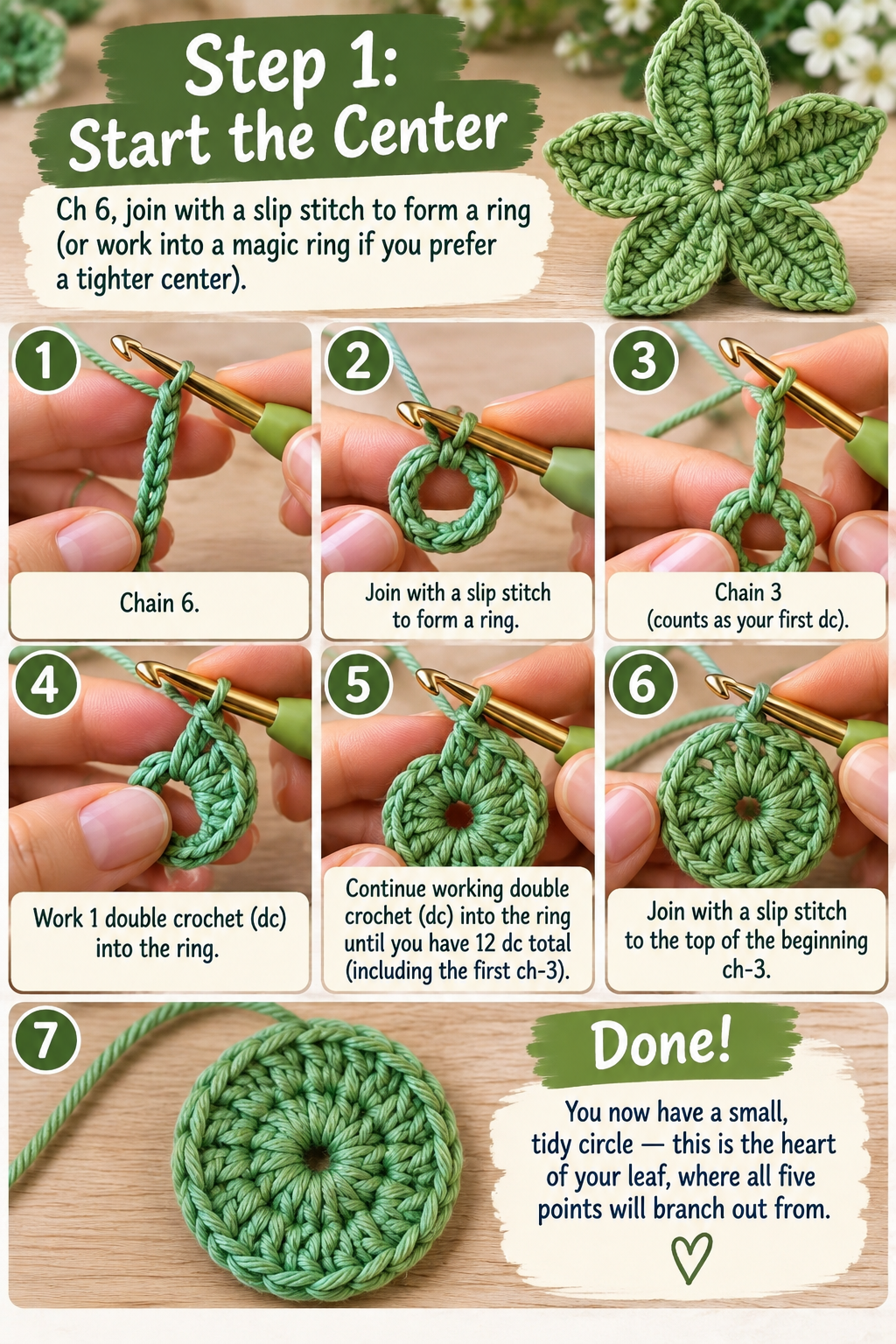
Ch 6, join with a slip stitch to form a ring (or work into a magic ring if you prefer a tighter center).
Ch 3 (counts as your first dc), then work 11 more dc into the ring, for 12 dc total. Join with a slip stitch to the top of the beginning ch-3.
You now have a small, tidy circle this is the heart of your leaf, where all five points will branch out from.
Step 2: Build the First Point
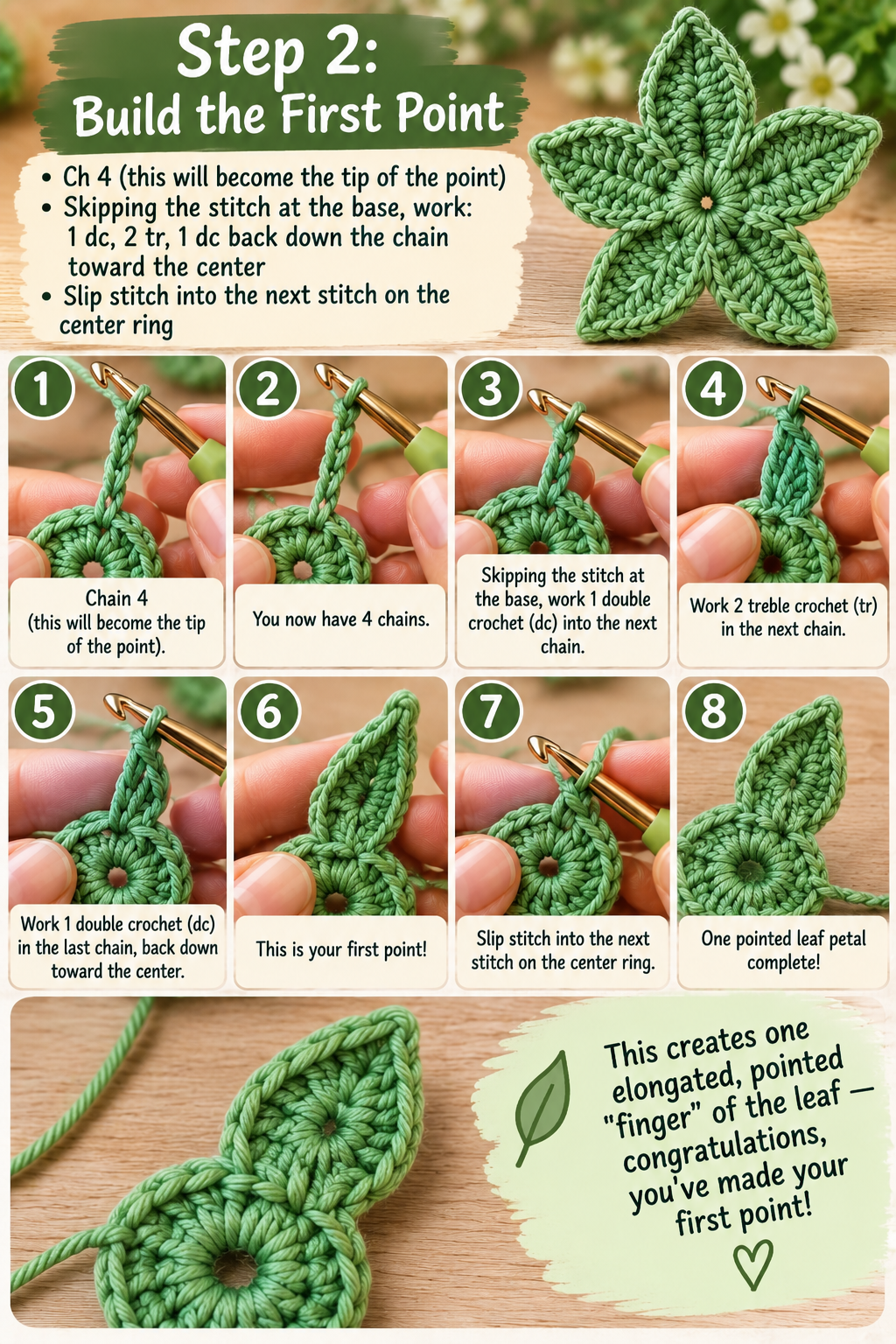
Ch 4 (this will become the tip of the point)
Skipping the stitch at the base, work: 1 dc, 2 tr, 1 dc back down the chain toward the center
Slip stitch into the next stitch on the center ring
This creates one elongated, pointed “finger” of the leaf congratulations, you’ve made your first point.
Step 3: Repeat for the Remaining Points
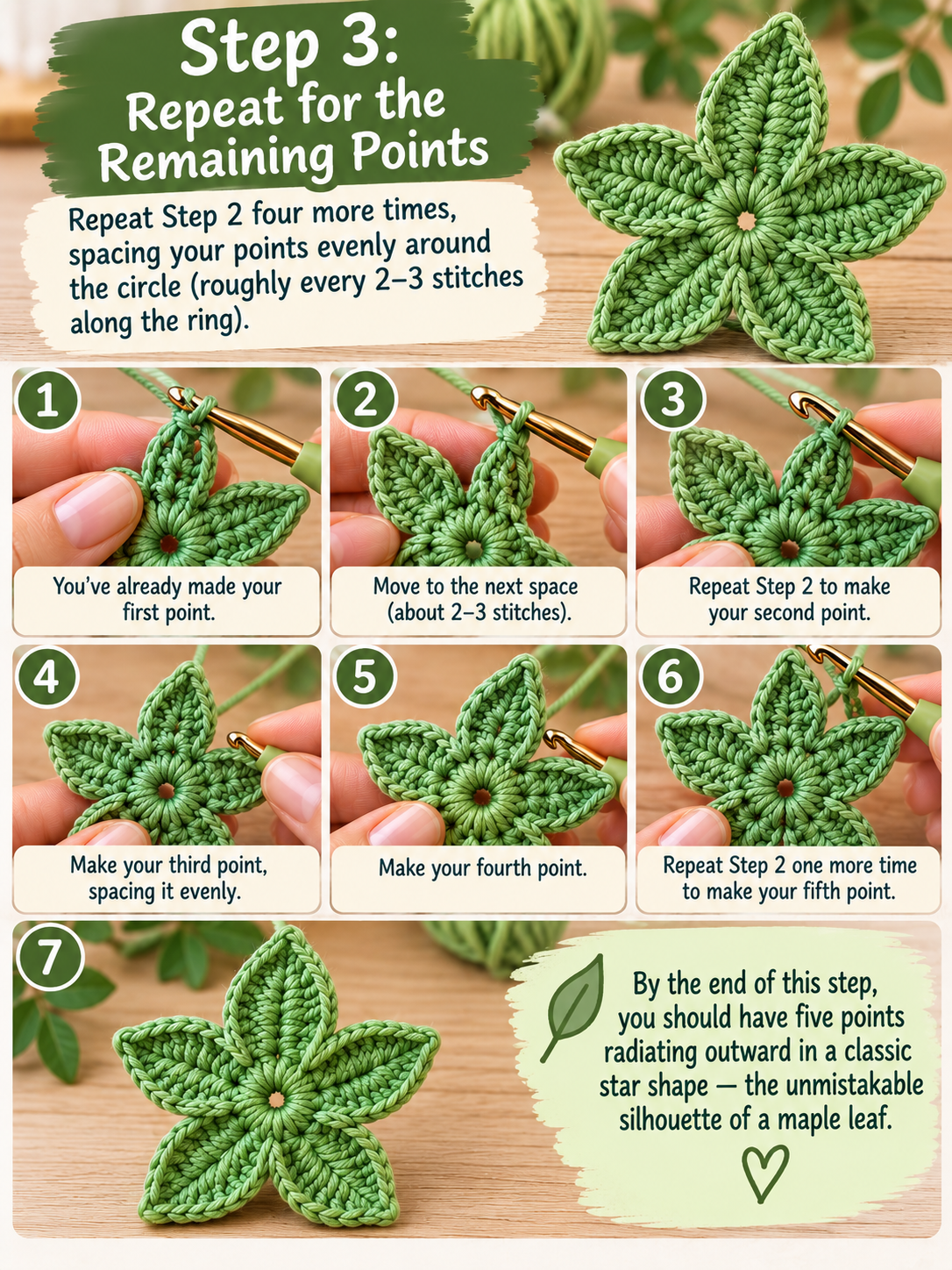
Repeat Step 2 four more times, spacing your points evenly around the circle (roughly every 2–3 stitches along the ring, depending on how full you’d like the leaf to look).
By the end of this step, you should have five points radiating outward in a classic star shape the unmistakable silhouette of a maple leaf.
Step 4: Add the Notches (Optional but Recommended)

For a more realistic, “true to nature” maple leaf shape, work a small dc2tog between each point as you go, gently pulling the base of each point inward. This creates those characteristic little notches you see between the lobes of a real maple leaf, rather than a perfectly smooth star.
Step 5: Create the Stem
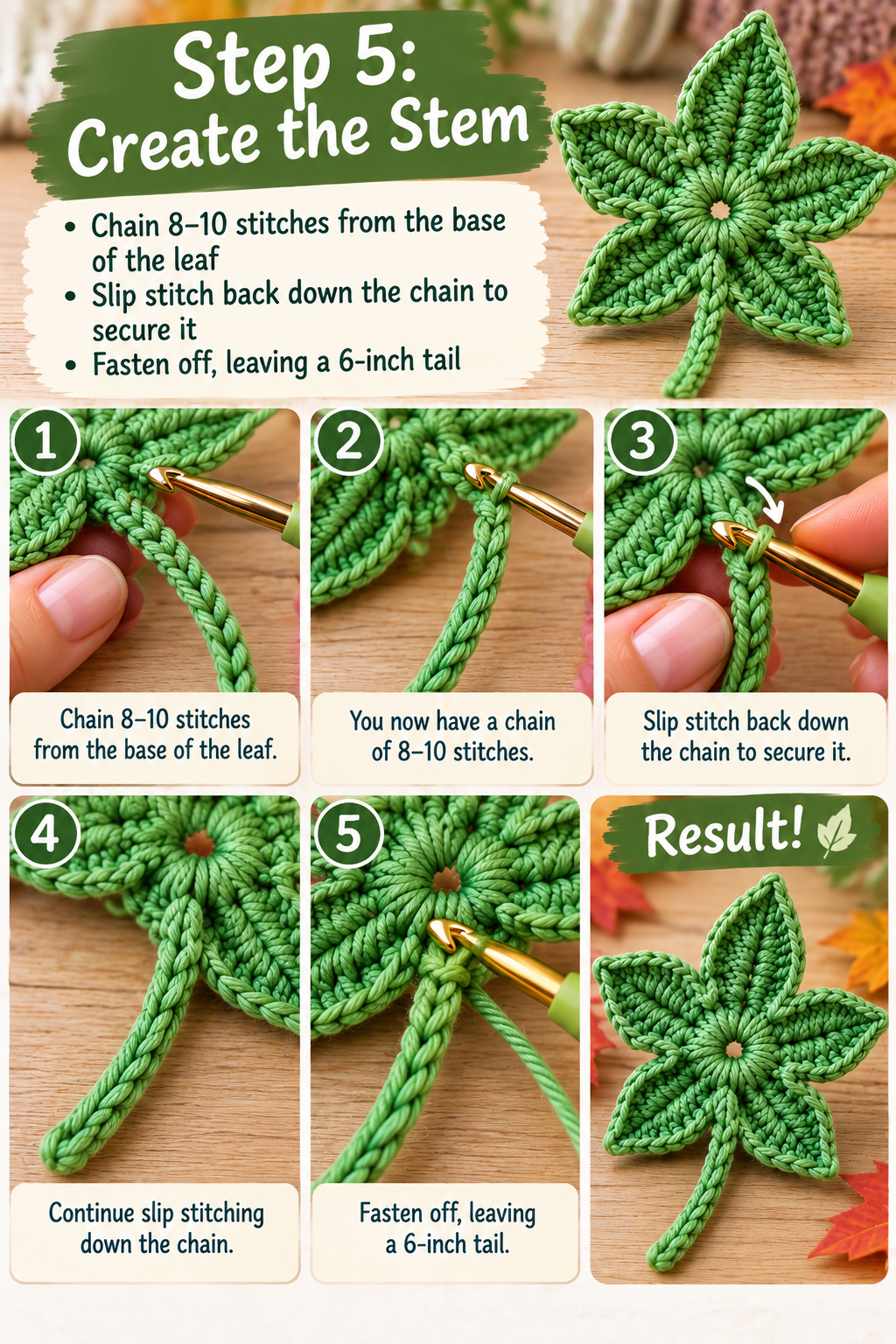
Chain 8–10 stitches from the base of the leaf
Slip stitch back down the chain to secure it
Fasten off, leaving a 6-inch tail
Step 6: Finish Up
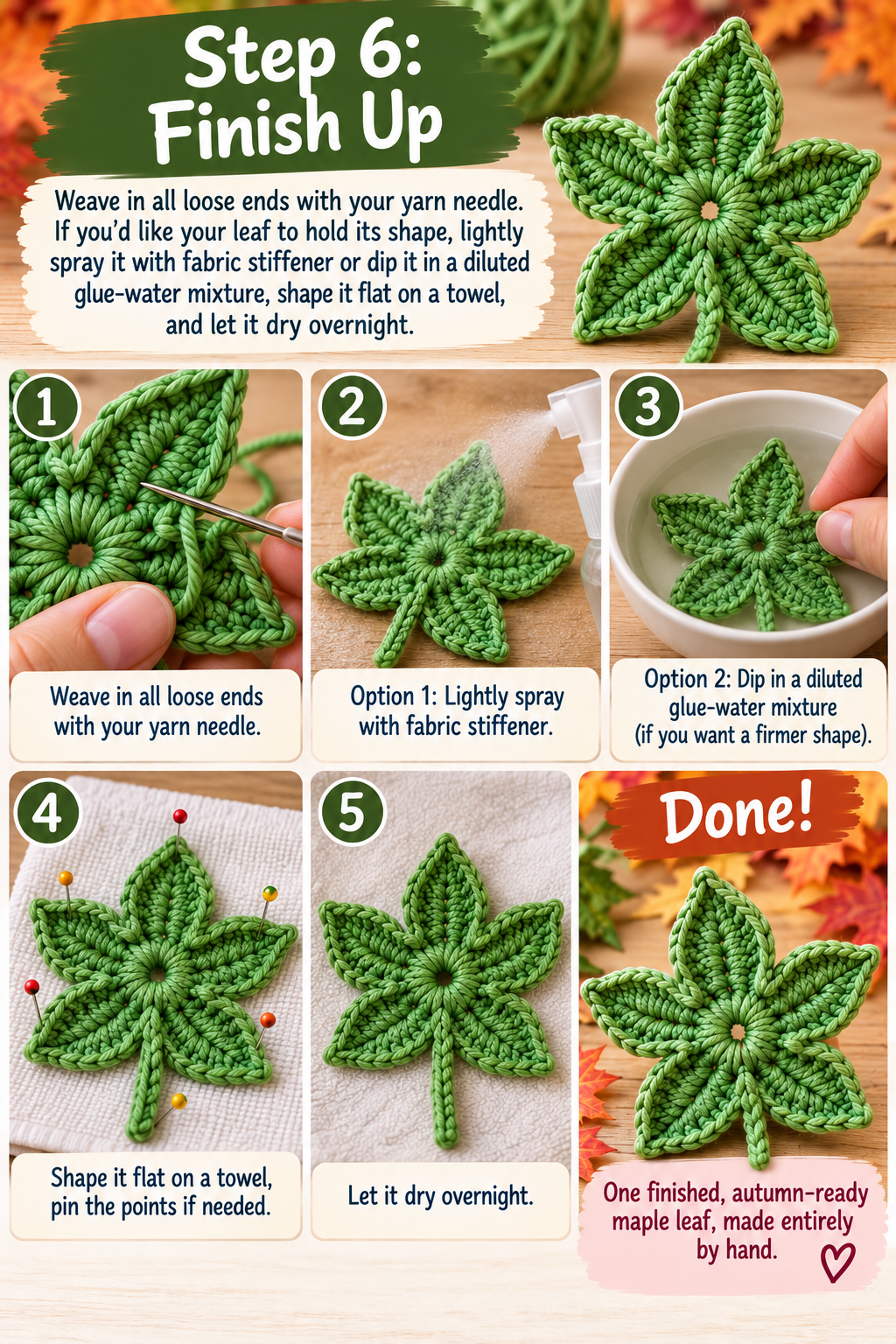
Weave in all loose ends with your yarn needle. If you’d like your leaf to hold its shape (especially useful for garlands or wreaths where you want the points standing up), lightly spray it with fabric stiffener or dip it in a diluted glue-water mixture, shape it flat on a towel, and let it dry overnight.
And that’s it one finished, autumn-ready maple leaf, made entirely by hand.
Tips, Variations & Ways to Use Your Leaves
Once you’ve made one leaf, you’ll likely want to make ten. Here are a few ideas to take the pattern further:
- Ombre leaves: Switch colors halfway through for a naturally fading, sun-touched look
- Garlands: String several leaves along twine or ribbon for a mantel or window display
- Coasters: Stiffen a single leaf flat, and it doubles beautifully as a rustic drink coaster
- Gift toppers: Attach a small leaf to a wrapped gift for an instantly seasonal touch
- Size variations: Use a smaller hook (3.5mm) with the same pattern for petite leaves, or a bulkier yarn with a larger hook for oversized statement pieces
Frequently Asked Questions
What does a maple leaf symbolize?
Beyond being the national emblem of Canada, the maple leaf is widely associated with strength, endurance, and balance largely because maple trees are known for their resilience through harsh winters and their generous, long-standing presence in a landscape.
What is the falling of leaves in autumn called?
This natural process is called abscission the point at which a tree seals off nutrients to its leaves, causing them to change color and eventually drop.
What tree is most often mistaken for a maple?
The sycamore (plane tree) is the most common look-alike, thanks to its similarly lobed, star-shaped leaves. The easiest tell? Maple leaves grow in opposite pairs; sycamore leaves alternate along the branch.
What’s the easiest first project for a beginner crocheter?
Small, repetitive projects like this maple leaf, simple granny squares, or basic coasters are ideal they teach core stitches without overwhelming you with shaping or pattern-reading.
What can I crochet in under an hour?
This maple leaf pattern is a great example most crocheters finish one in 20–30 minutes once they’re comfortable with the stitch repeats, making it a perfect quick, satisfying project for a coffee break or a cozy evening.
Final Thoughts
There’s something quietly special about making your own autumn stitch by stitch, in a color that never fades and never falls off a branch. Whether this is your very first crochet project or your fiftieth, I hope this little maple leaf brings a bit of that crisp-morning, golden-afternoon feeling into your home, no matter the season outside your window.
If you make one (or a whole garland of them), I’d love to see it. Share a photo, tag it, or drop a comment below and if you’re hooked on autumn-themed crochet now, stick around, because there are plenty more seasonal patterns coming your way.