

Picture this. You’ve bought a hook, a ball of yarn, and you’ve watched three videos. Then you sit down, and within ten minutes your “chain” looks like a bird’s nest and you’re wondering whether crochet is for you.
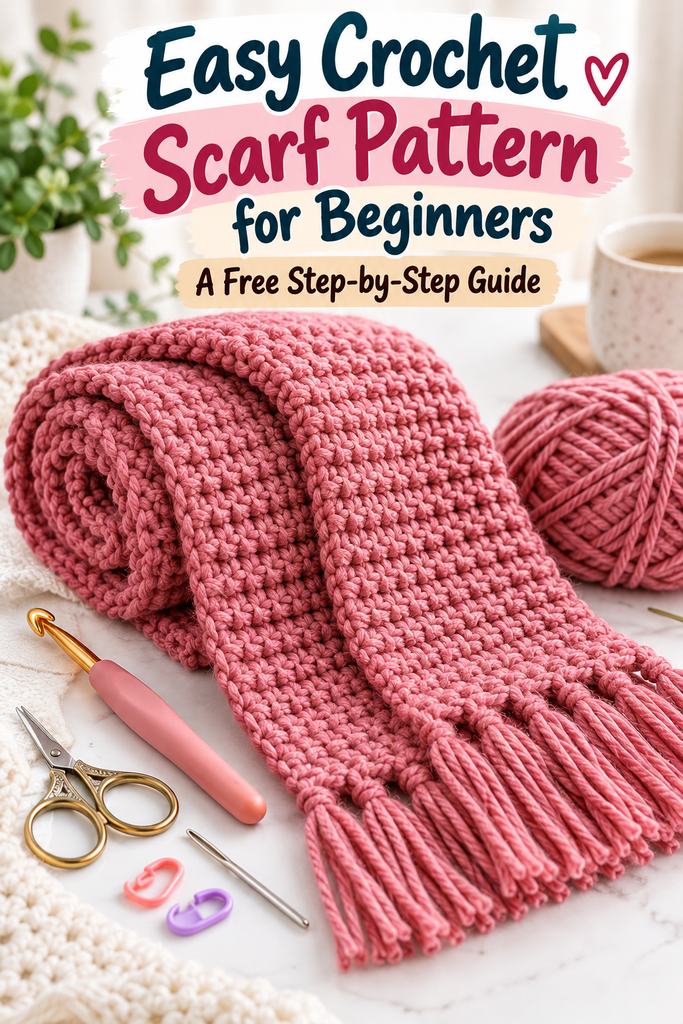
Here’s the good news: it is. The problem is almost never you. It’s that most beginner advice tries to teach everything at once. This guide does the opposite. You’ll learn one stitch, repeat it until you have a rectangle, and end up with a real, wearable scarf.
Table of Contents
Key Takeaways
- The best first scarf uses a single stitch: single crochet (or half double crochet if you want it faster).
- Worsted-weight yarn in a light, solid color and a 5.5–6 mm hook make mistakes easy to see and fix.
- A scarf is just a long rectangle: chain, work rows, fasten off.
- Don’t expect to finish a whole scarf in an hour. Small projects are better for 15-minute sessions.
- Keep your stitch count the same every row. That one habit matters most.
Why a Scarf Is the Perfect First Project
A scarf has no shaping, no increases, no decreases and no sewing. If you can make a row and turn your work, you can make a scarf.
There’s also a bigger idea behind this guide. In their book Made to Stick, Chip and Dan Heath describe an experiment by Elizabeth Newton at Stanford. One group, the “tappers,” tapped out the rhythm of a well-known song, like “Happy Birthday.” Another group, the “listeners,” tried to guess it. Out of 120 songs, listeners guessed only three. The tappers had predicted they’d get about half right.
The Heaths call this the Curse of Knowledge: once you know something, it’s hard to remember what it felt like not to know it. Crochet patterns suffer from it badly. Experienced crocheters write “sc across, ch 1, turn” and hear a clear tune. Beginners hear taps. So in this guide, every step is spelled out, and we keep to one core idea: one stitch, repeated.
What You Need (and What to Skip)
Keep your supplies simple. Fancy materials make learning harder, not easier.
- Yarn: about 250–300 yards of worsted-weight (medium, category 4) yarn. Choose a smooth, light or medium solid color. Dark yarn hides your stitches, and fuzzy or textured yarn hides them even more.
- Hook: 5.5 mm or 6 mm. Check your yarn label for the recommended size and go one step larger if your stitches feel tight.
- Scissors and a yarn needle for weaving in the ends.
- Stitch marker (optional): a safety pin or a scrap of contrasting yarn works fine.

Want faster results? Bulky yarn with an 8 mm hook works up noticeably quicker, though the scarf will be thicker and heavier.
What Is the Best Crochet Stitch for a Beginner Scarf?
For a first scarf, the two best options are:
- Single crochet (sc): the shortest, tightest stitch. It makes a dense, warm fabric and is the easiest to count. Best if you want the most control.
- Half double crochet (hdc): slightly taller, so the scarf grows faster and feels a bit softer. Best if you get bored easily.
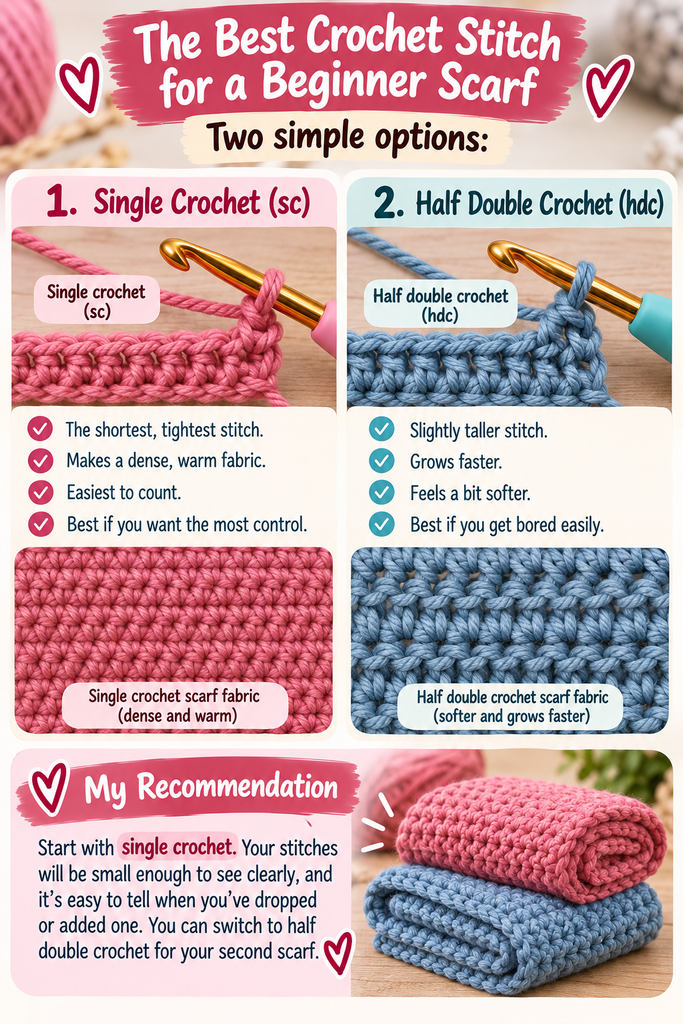
My recommendation: start with single crochet. Your stitches will be small enough to see clearly, and it’s easy to tell when you’ve dropped or added one. You can switch to half double crochet for your second scarf.
The Free Easy Scarf Pattern, Step by Step
This pattern makes a scarf roughly 6 inches wide and 55–60 inches long. Your size will vary with your yarn and tension, and that’s fine.
Step 1: Make a slip knot

Loop the yarn around two fingers, pull a loop through, and tighten it gently onto your hook. It should slide, not grip.
Step 2: Chain 26
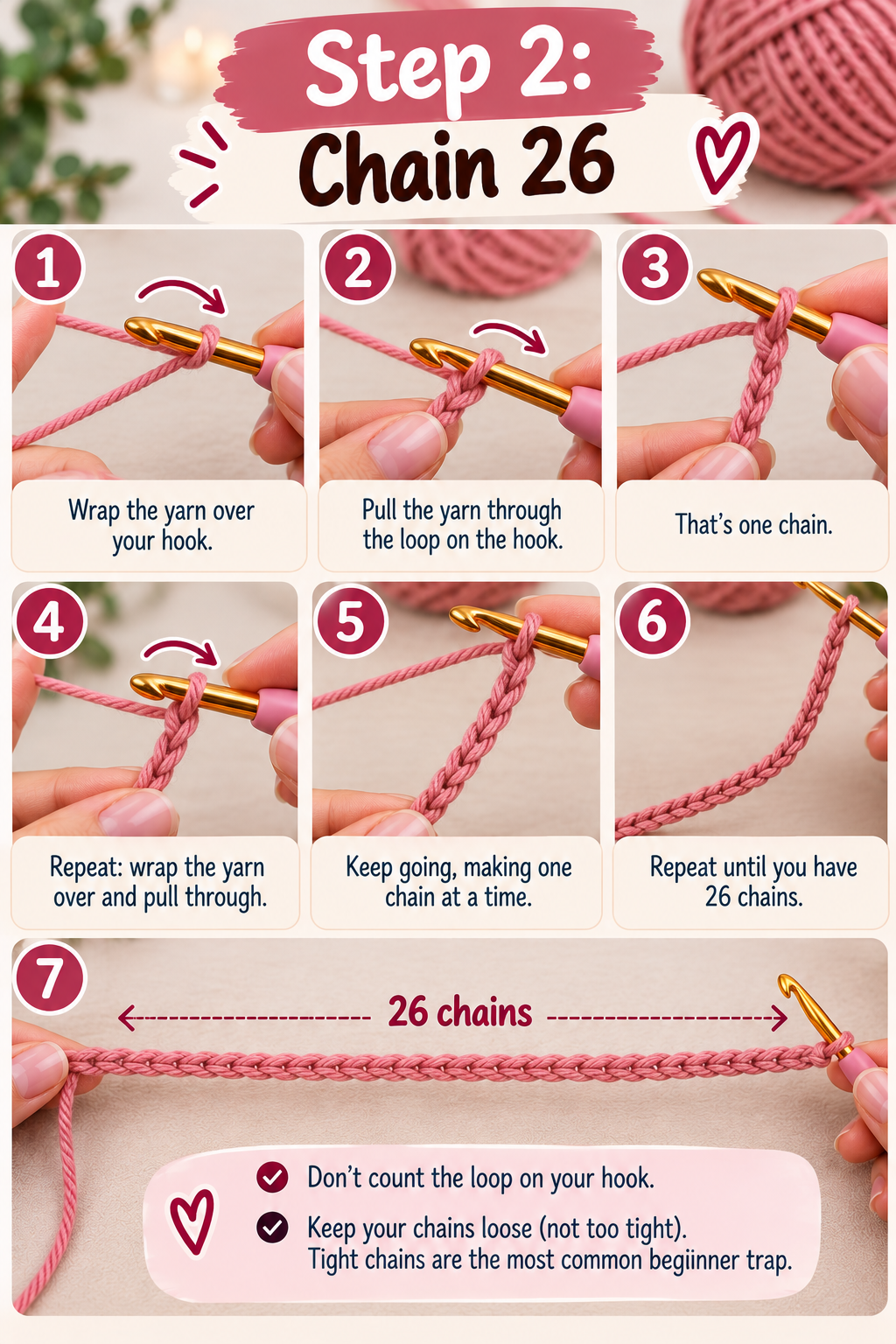
Wrap the yarn over your hook and pull it through the loop on the hook. That’s one chain. Repeat until you have 26. Don’t count the loop on your hook. Keep your chains loose, because tight chains are the most common beginner trap.
Step 3: Work your first row
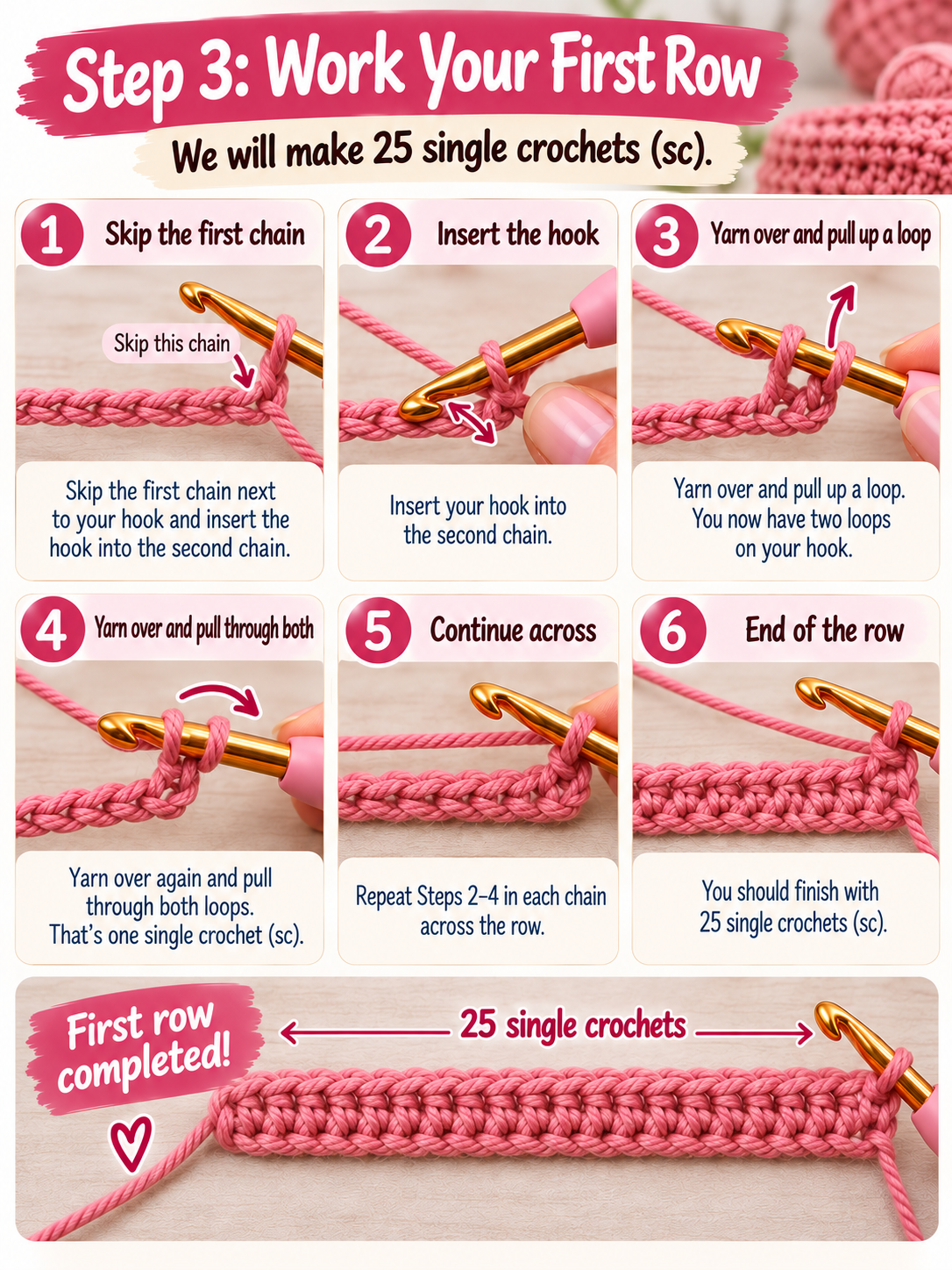
Skip the first chain next to your hook and insert the hook into the second chain. Then:
Yarn over and pull up a loop (two loops on the hook).
Yarn over again and pull through both loops. That’s one single crochet.
Repeat in each chain across.
You should finish with 25 stitches. Count them. This count is your safety net for the whole scarf.
Step 4: Turn and begin row 2

Chain 1 (this doesn’t count as a stitch), then turn your work so the other side faces you. Work a single crochet into the first stitch, and keep going across. Always put your hook under both loops at the top of each stitch.
Step 5: Repeat until it’s long enough

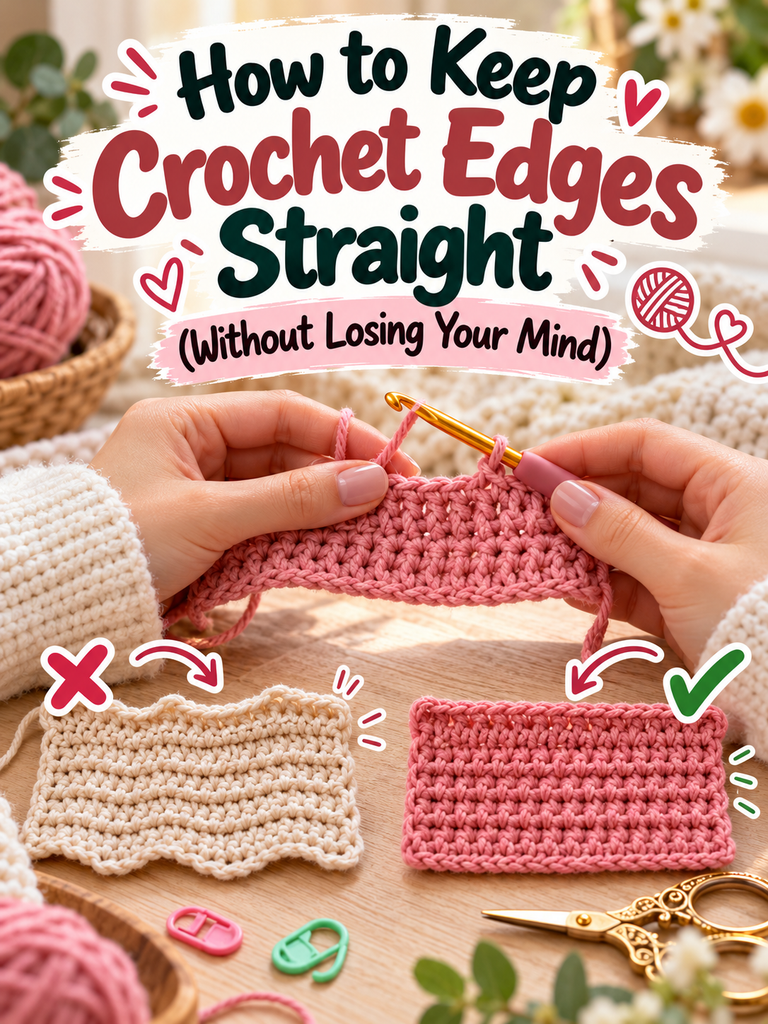
Every row is the same: chain 1, turn, 25 single crochets. Count the stitches at the end of each row for the first ten rows. After that, you’ll start to feel when something is off. The edges should look straight, like a clean rectangle.
Step 6: Fasten off and finish
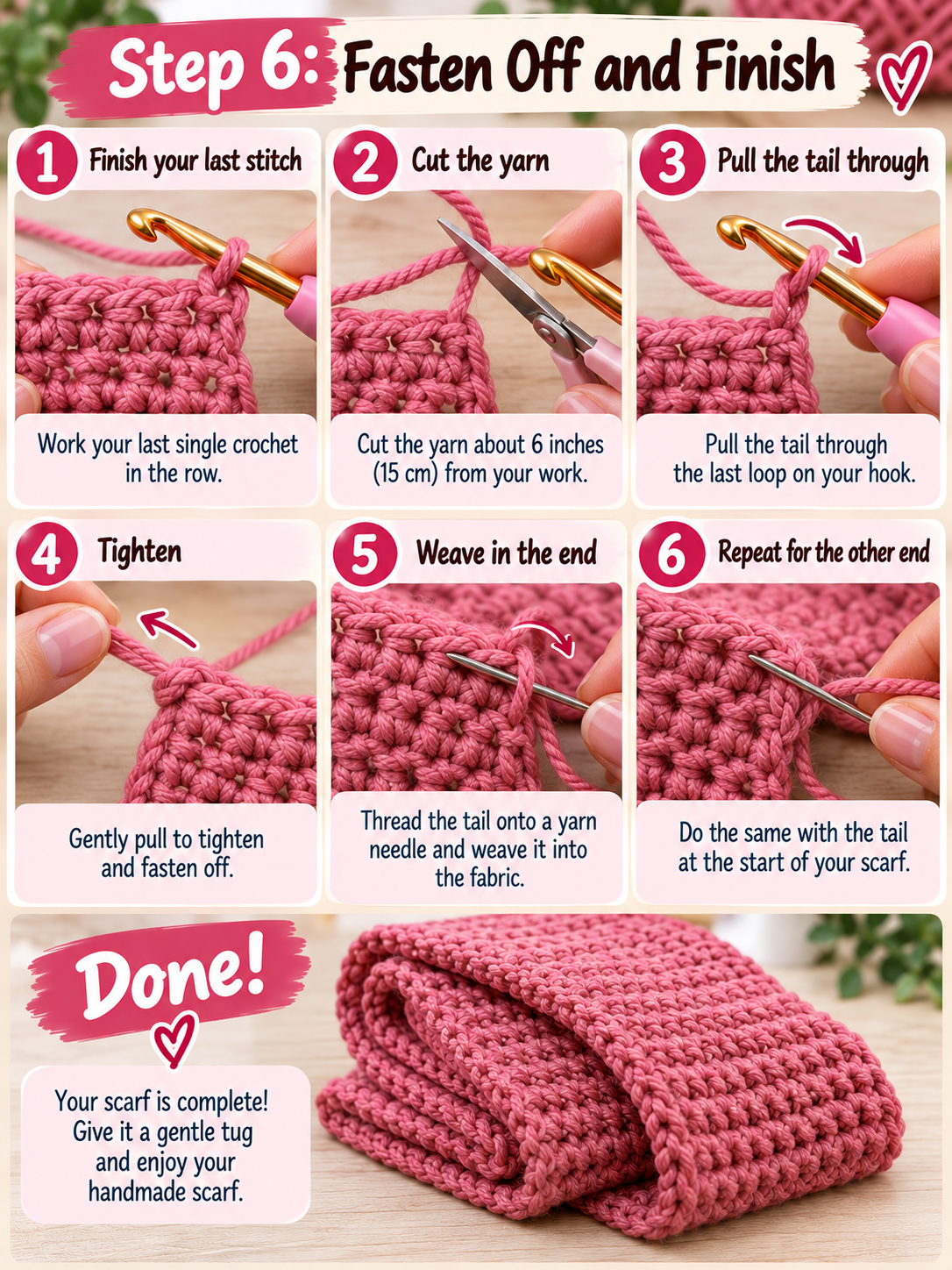
When the scarf is the length you want, cut the yarn about 6 inches from your work, pull the tail through the last loop, and tighten. Thread the tail onto your yarn needle and weave it into the fabric. Do the same with the tail at the start. Give it a gentle tug and you’re done.
What Are Some Free Easy Scarf Patterns to Try Next?
Once you’ve finished your first scarf, you don’t need a new set of skills. You just need small variations on the same rectangle:
- Half double crochet scarf: same steps, taller stitch, faster growth.
- Striped scarf: change color every few rows to practice joining new yarn.
- Ribbed-look scarf: work single crochet into the back loop only for a stretchy, textured fabric.
- Fringe scarf: add tassels to the short ends for a polished finish.
Each one changes a single variable. That’s how skills stick: add one new thing at a time.
Common Beginner Mistakes (and How to Fix Them)
Almost everyone runs into these. You’re not doing it wrong.
- The scarf gets narrower or wider. You’ve dropped or added a stitch. Count each row and look closely at the first and last stitch. The last stitch is easy to miss.
- Edges are wavy. Keep the turning chain loose and don’t count it as a stitch.
- Stitches feel tight and hard to enter. Relax your grip or use a larger hook.
- You spot a mistake three rows back. Pull out the hook, gently unravel the yarn to the mistake, and pick up again. It’s not failure. It’s part of the craft.
What Can I Crochet in 15 Minutes, or in an Hour?
Let’s be honest: a full scarf won’t happen in an hour. It typically takes many short sessions spread over days or weeks, depending on your pace and yarn.
If you want something quick to practice on, a small flat square such as a coaster or dishcloth is ideal. It uses the same skills as the scarf, only smaller, so you finish before your motivation fades. A short chain of a few rows also makes a good bookmark. Think of these as warm-ups before you commit to a longer project.
Frequently Asked Questions
What is the most beginner-friendly crochet pattern?
A plain rectangle in single crochet. A scarf, a dishcloth or a blanket square all use the same skills.
How many stitches should I chain for a scarf?
Chain 26 for about a 6-inch-wide scarf in worsted yarn with a 5.5–6 mm hook. For a wider scarf, add more chains. Your yarn and tension will change the result.
How long should a crochet scarf be?
Most adult scarves fall somewhere around 55–70 inches. Hold it up against your body as you go and stop when it feels right.
Final Thoughts: Start Small, Finish Something
The hardest part of learning to crochet isn’t the stitches. It’s staying motivated long enough to finish something. That’s why this guide focuses on a single core idea: one stitch, repeated, until you have a scarf.
Your first scarf won’t be perfect, and that’s a good sign. It means you made something with your own hands.
Ready to start? Grab a hook and a ball of yarn, and chain your first 26. When you finish, tell me in the comments how it went: what stitch did you choose, and where did you get stuck? Your question might help the next beginner.
Idea credit: the tapper and listener experiment is described in Made to Stick: Why Some Ideas Survive and Others Die by Chip Heath and Dan Heath (Random House, 2007).