

Table of Contents
Key Takeaways
- A beginner poncho is usually just two rectangles and a seam, so it’s far easier than it looks.
- Double crochet, half double crochet, and the granny stitch are the friendliest stitches for a first poncho.
- Worsted-weight yarn and a gauge swatch will save you a lot of frustration.
- Ponchos come in and out of fashion, but they have a long history and a practical appeal that keeps them around.
- Small quick projects are a great way to build confidence before you start a big one.
Why the Poncho Is the Perfect First Big Project
I’ll be honest: most beginners avoid wearables. A scarf feels safe. A blanket feels tedious. But a sweater? That sounds like sizing math, sleeves, and tears.
The poncho is the sneaky exception. It has no sleeves, no armholes to shape, and no complicated fitting. At its simplest, you’re crocheting flat rectangles, which is the same skill you used for your first dishcloth.
If you’ve been wondering whether you’re “ready” to make something you can actually wear, you probably are. Let’s walk through it.
What Is the Best Crochet Stitch for a Poncho?
This is the question I hear most, and the honest answer is that it depends on the drape you want. Here are the stitches I’d point a beginner toward:
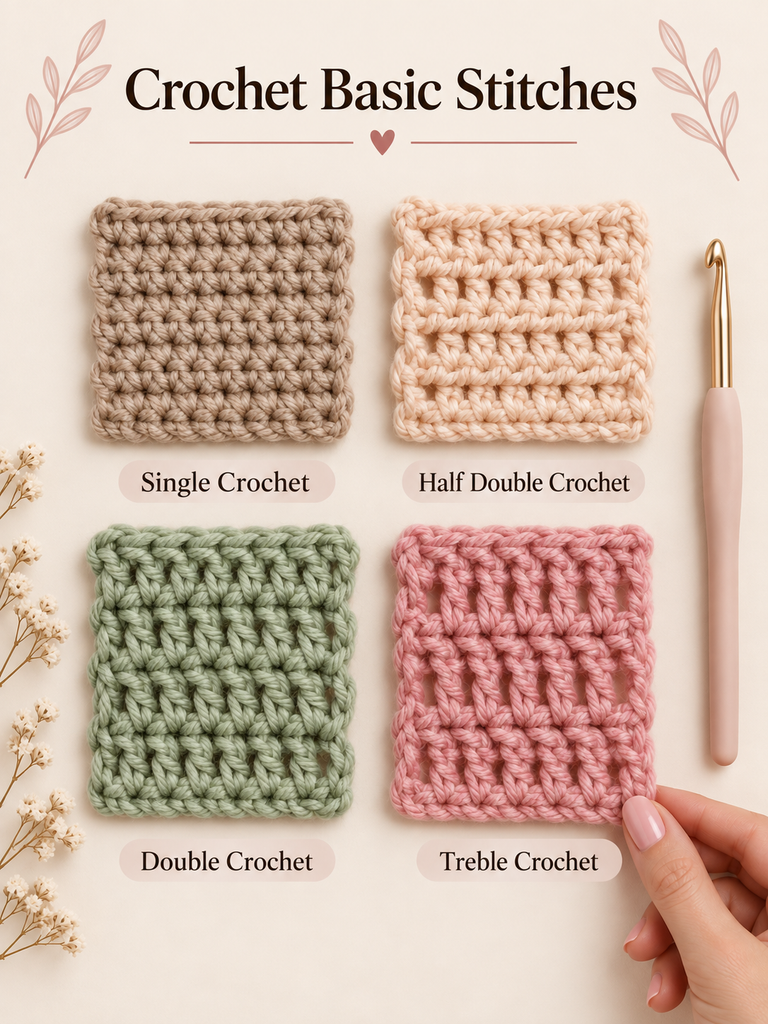
- Double crochet (dc): Fast, easy to learn, and gives a soft, flowing fabric. If you only learn one stitch for ponchos, make it this one.
- Half double crochet (hdc): Slightly denser and warmer. It’s great if you want a cozier, more structured poncho.
- Granny stitch: Clusters of double crochet separated by chain spaces. It’s airy, forgiving, and it looks impressive even though it’s simple.
- V-stitch: An open, lacy look that works up quickly and uses less yarn.
- Moss (linen) stitch: A woven-looking texture that’s a bit slower but very elegant.
One tip I wish someone had given me early on: tight stitches make stiff fabric. A poncho needs to drape over your shoulders, so go up a hook size from what the yarn label suggests if your work feels board-like.
How to Crochet an Easy Poncho for Beginners
Here’s the basic method behind many of the designs below. Think of it as a recipe you can adapt.
What You’ll Need
- Worsted-weight (medium #4) yarn. For an adult size, expect to use roughly 800 to 1,200 yards, depending on the stitch and size.
- A 5.0 to 6.0 mm hook, adjusted to get a soft drape.
- Scissors, a yarn needle, and a measuring tape.
Step 1: Make a Gauge Swatch
I know, nobody wants to crochet a swatch. But a 4-inch square tells you how your yarn and stitch behave, and it will save you from ripping out a half-finished poncho.

Step 2: Crochet Two Rectangles
Chain enough stitches to reach your desired width, usually 28 to 32 inches for the front panel, and work your chosen stitch back and forth until the piece is about 24 to 28 inches long. Make a second identical rectangle for the back.

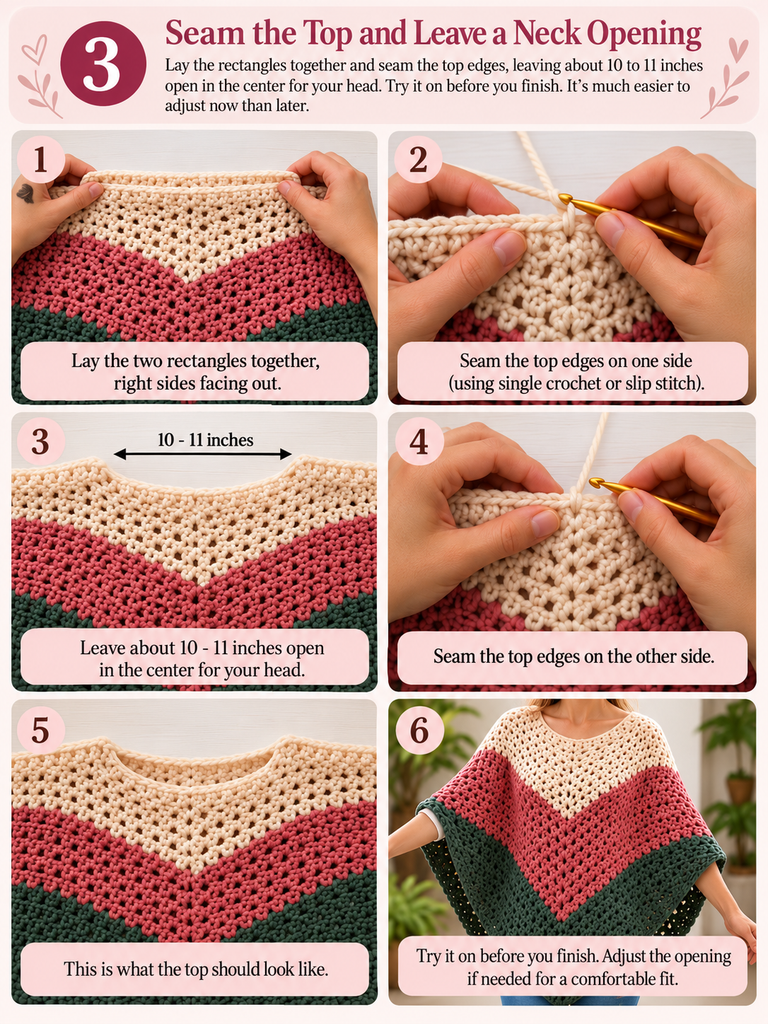
Step 3: Seam the Top and Leave a Neck Opening
Lay the rectangles together and seam the top edges, leaving about 10 to 11 inches open in the center for your head. Try it on before you finish. It’s much easier to adjust now than later.
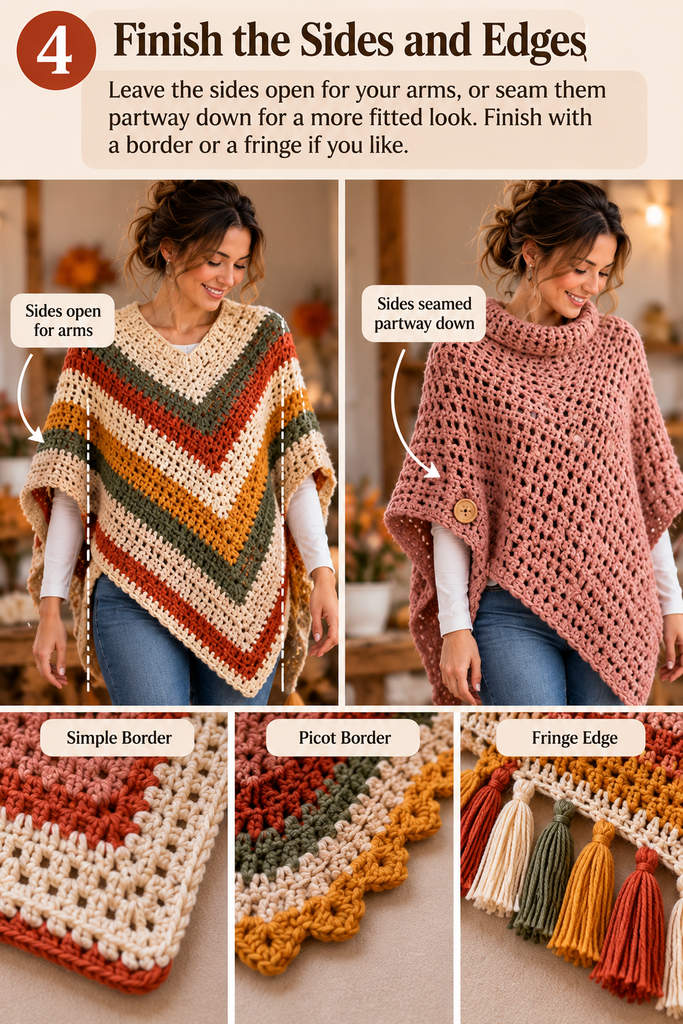
Step 4: Finish the Sides and Edges
Leave the sides open for your arms, or seam them partway down for a more fitted look. Finish with a border or a fringe if you like.
That’s really it. If you can make a rectangle, you can make a poncho.
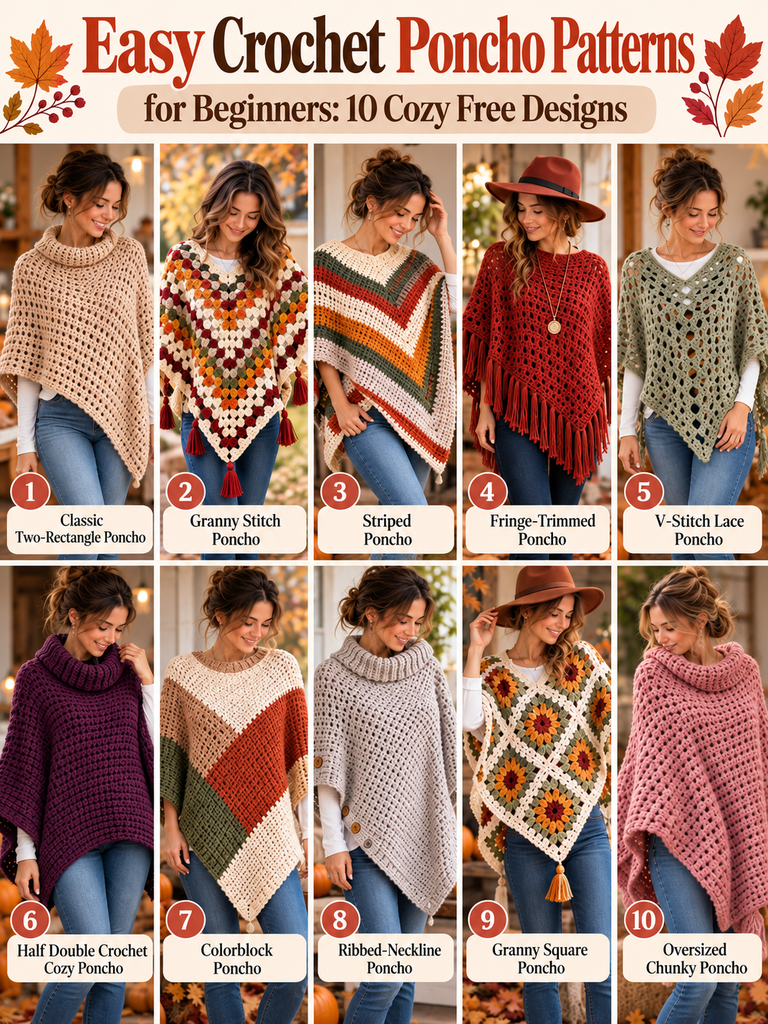
10 Cozy Free Poncho Design Ideas for Beginners
These are design concepts you can follow using the method above, not copyrighted patterns. Mix and match the stitches and finishes to make them your own.
The classic two-rectangle poncho.

Double crochet throughout. It’s the one to start with.
The granny stitch poncho.
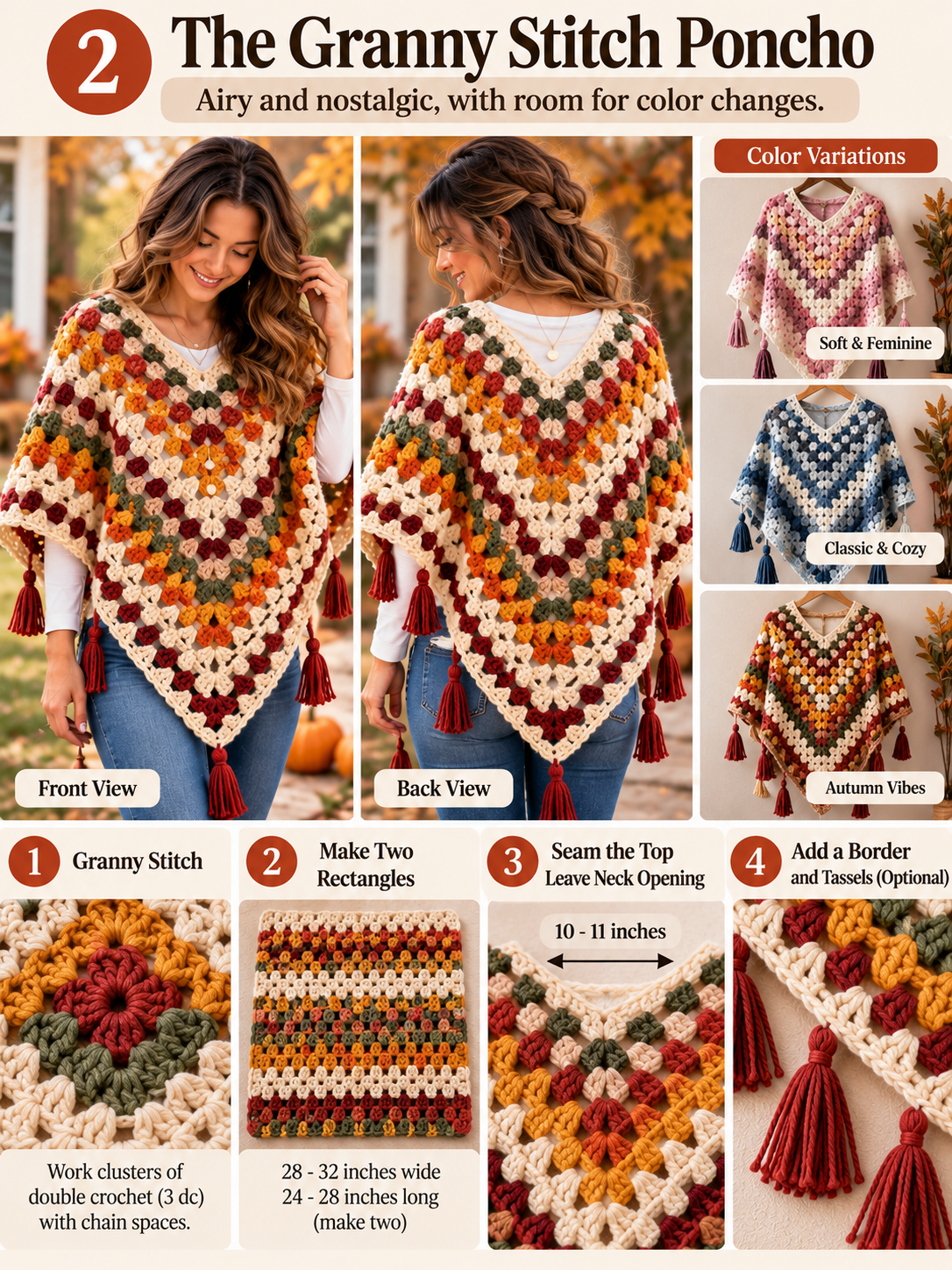
Airy and nostalgic, with room for color changes.
The striped poncho.

Swap colors every few rows. It’s a great way to use up leftover yarn.
The fringe-trimmed poncho.

Add tassels along the bottom edge for a boho feel.
The V-stitch lace poncho.
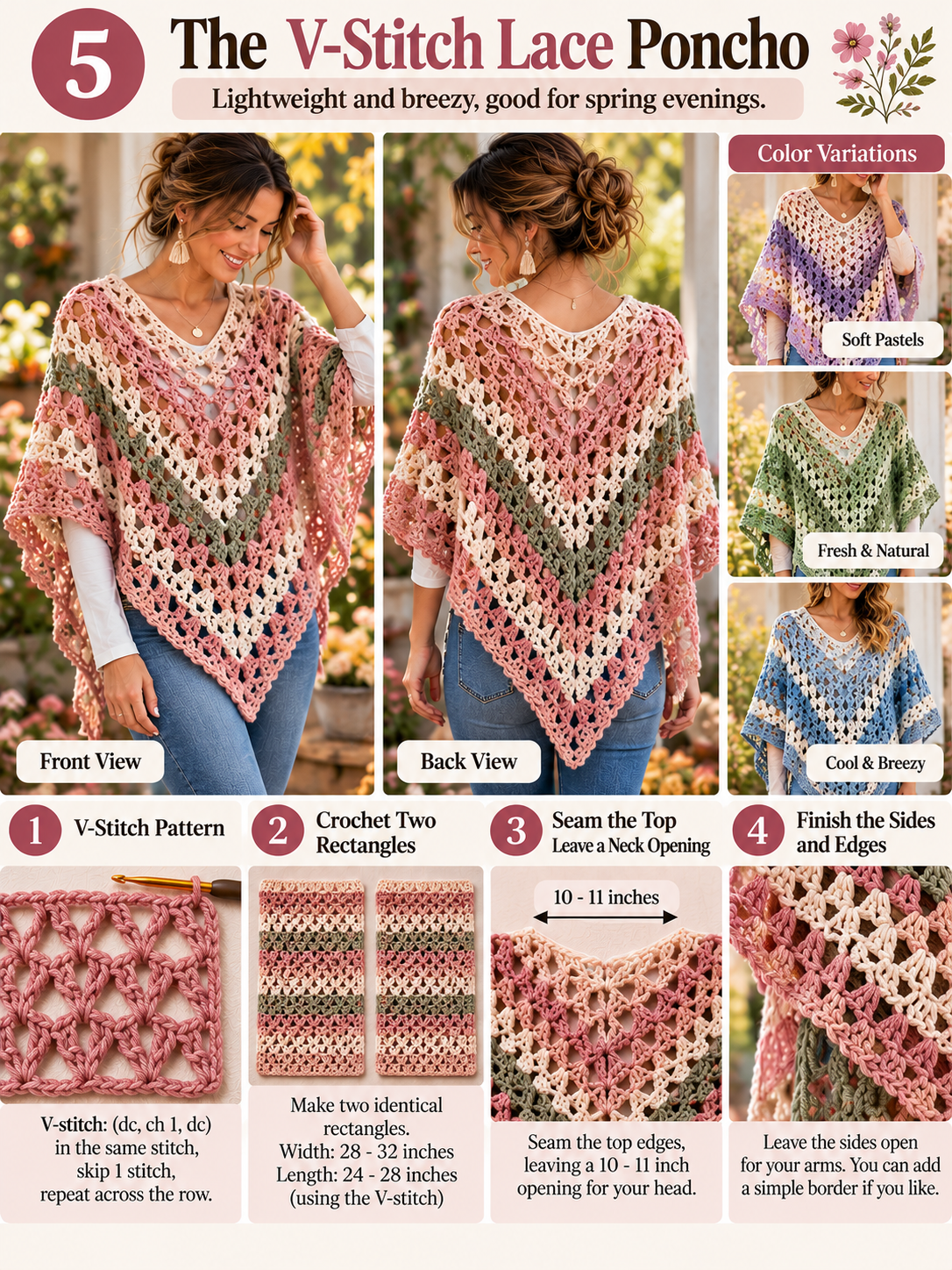
Lightweight and breezy, good for spring evenings.
The half double crochet cozy poncho.
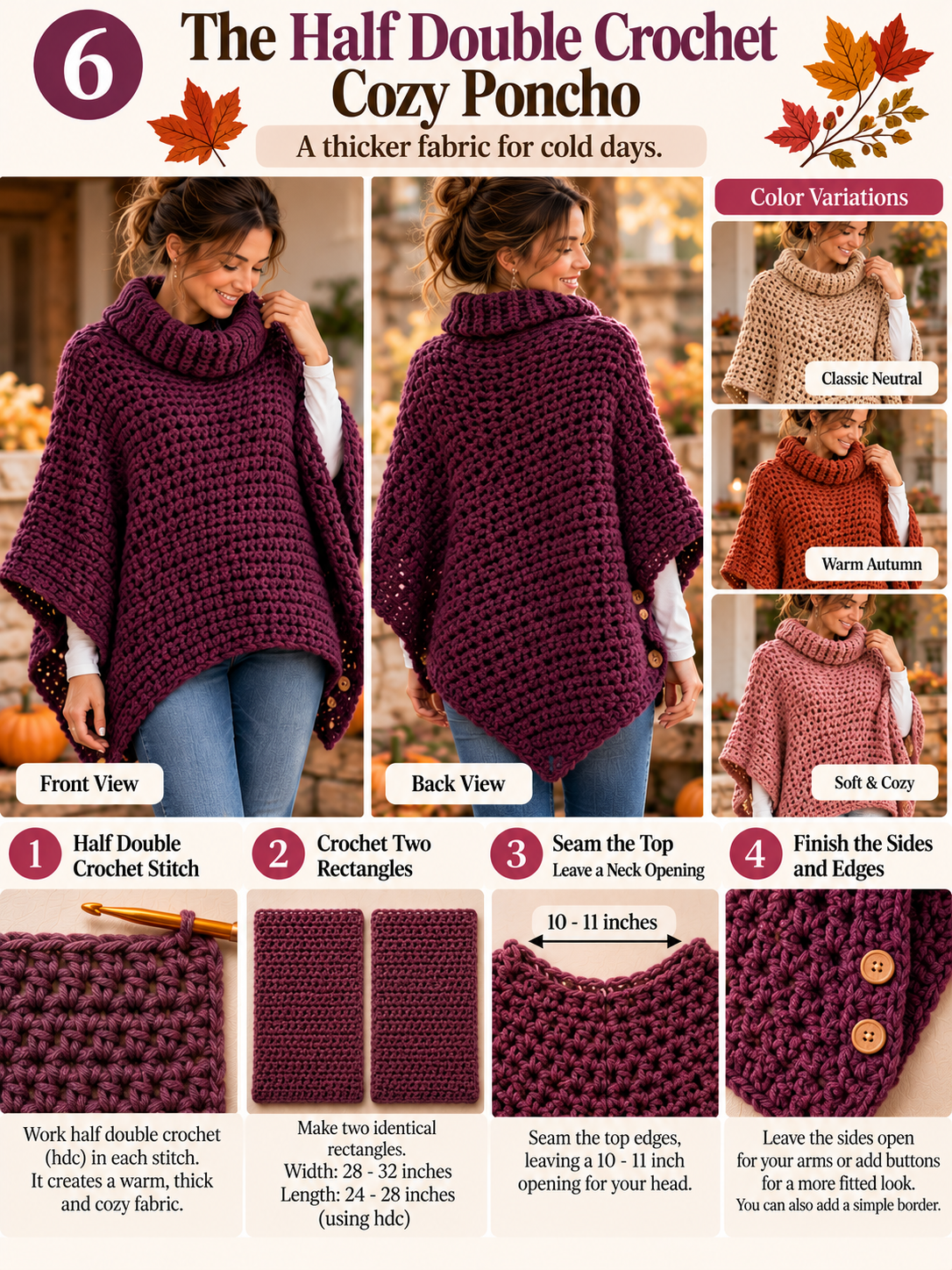
A thicker fabric for cold days.
The colorblock poncho.

Two or three bold colors, each with its own section.
The ribbed-neckline poncho.

Add a simple ribbed collar so it sits snugly around your neck.
The granny square poncho.
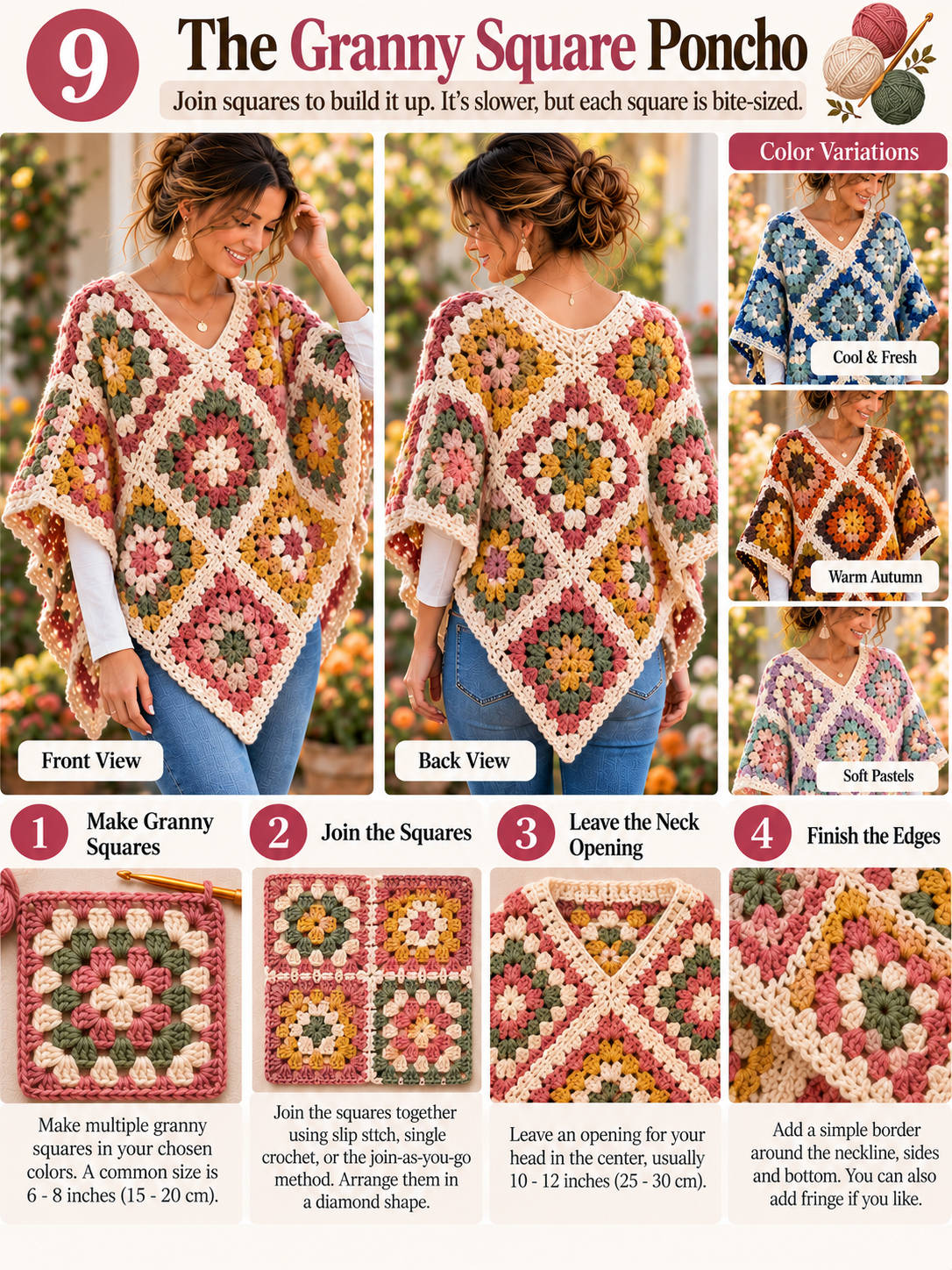
Join squares to build it up. It’s slower, but each square is bite-sized.
The oversized chunky poncho.
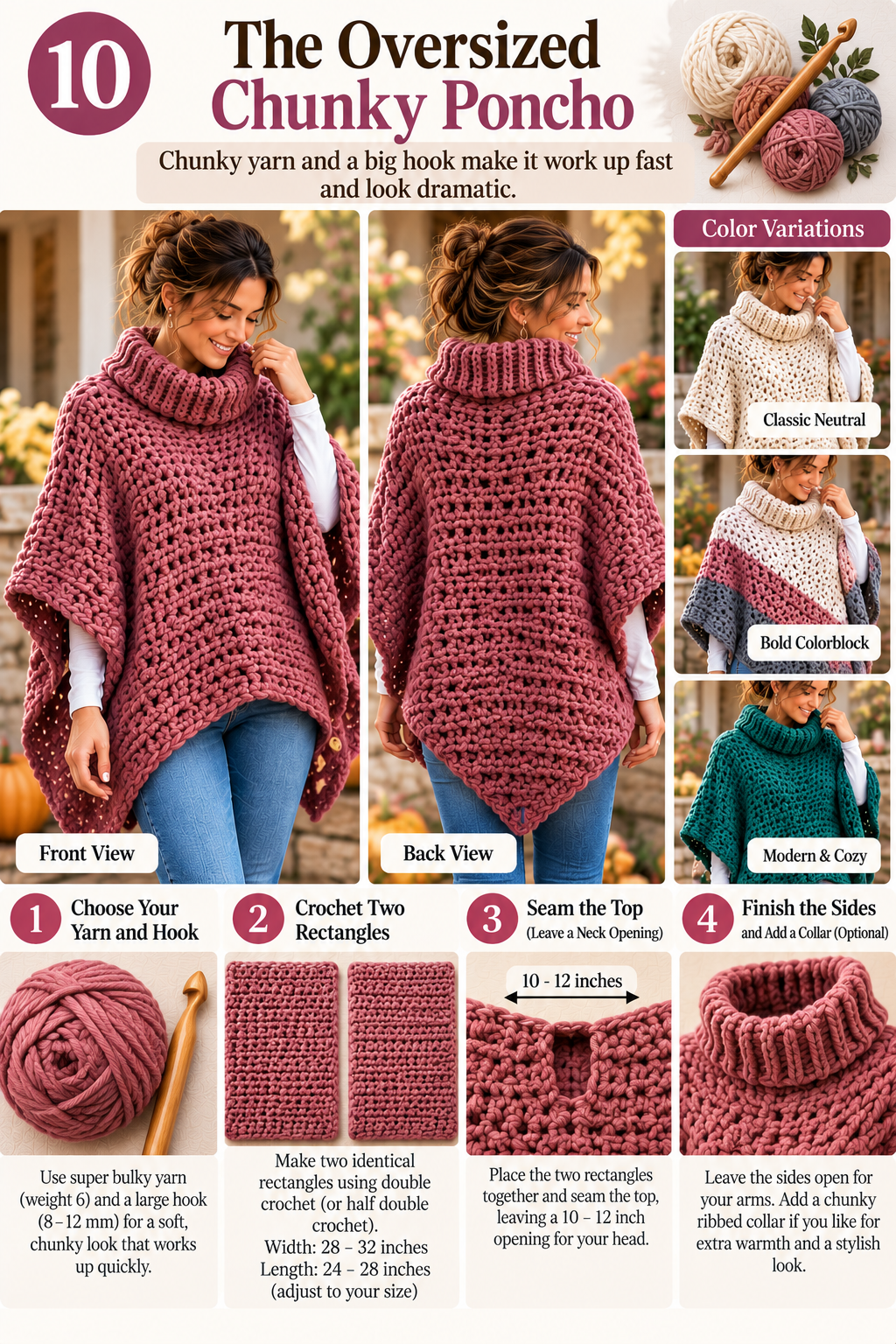
Chunky yarn and a big hook make it work up fast and look dramatic.
Are Ponchos Still in Style?
Fashion is cyclical, and ponchos have had many comebacks. Their appeal is practical as much as trendy: they’re easy to layer, forgiving to fit, and handmade versions let you pick your own colors rather than whatever the stores are selling that season.
I’d rather not give you a confident “this is in, that is out” list. Trend predictions change quickly and vary by region and by who’s telling you. A better test: if you love the color and it feels good to wear, you’ll wear it, and that’s the whole point of making your own.
Is It Okay to Wear a Poncho?
People do ask whether it’s appropriate for someone who isn’t of Latin American descent to wear a poncho. The poncho has deep roots among Indigenous peoples of the Andes and other parts of the Americas, and it’s worth knowing that history. In general, wearing a poncho as everyday clothing is widely accepted. What matters is respect: acknowledge where the garment comes from, support Indigenous and Latin American makers when you can, and avoid wearing it as a costume or stereotype.
Quick Crochet Projects to Build Your Confidence
Maybe a full poncho still feels like a leap. Totally fine. Many people start with smaller projects that teach the same skills. How long each takes depends entirely on your speed and experience, but these are typically quick:
- Within the hour: Dishcloths, coasters, simple headbands, and ear warmers.
- A little longer: Basic scarves and cowls. These are the best practice for working in rows.
- Short and sweet: Small amigurumi, or “kawaii crochet,” the cute, tiny, often wide-eyed stuffed toys. They use basic stitches in the round.
Pick one that sounds fun, and you’ll be surprised how much your tension and speed improve. By the time you pick up your poncho yarn, it’ll feel familiar.
Final Thoughts
The poncho is one of those projects that looks more advanced than it is. Two rectangles, a seam, and a little patience, and you’ve made something you can wear tomorrow. Start with double crochet, take your time with the swatch, and don’t be afraid to try a stripe or a fringe once you’re comfortable.
Most importantly, your first poncho doesn’t have to be perfect. Mine certainly wasn’t, and I still wore it everywhere.
Your Turn
Which design are you going to try first? Tell me in the comments which stitch you picked and what colors you’re dreaming of. And if you’ve already made a poncho, share a tip you wish you’d known at the start. Someone just starting out will thank you.

One Comment