
It’s 3 a.m. The baby is fussing, you’re half asleep, and you’re patting around in the dark for a clean burp cloth. You know you bought a whole stack of them. They’re somewhere. Probably in the drawer across the room, under the onesies that still don’t fit.
If that scene feels a little too familiar, stick with me. Because the fix is surprisingly simple, and you can sew it yourself in an afternoon: a hanging crib organizer. The Crib Organizer PDF Sewing Pattern from Cheri Demeter Patterns is one of the sweetest takes on this idea I’ve come across, and I want to walk you through why it works so well.
Table of Contents
Key Takeaways
- A crib organizer keeps diapers, wipes, brushes and small toys within arm’s reach, right where you need them.
- This PDF pattern features roomy, layered pockets and soft fabric ties that bow neatly over the crib rail.
- It looks lovely in cozy cottons like double gauze, muslin, gingham or small prints, so it’s easy to match any nursery.
- It’s a manageable project for confident beginners and a thoughtful handmade baby shower gift.
- Always hang it on the outside of the crib and keep the ties secure and out of baby’s reach.
Why Every Nursery Needs a Little Pocket Magic
Here’s the thing about newborn life: most of what you need is small. Diapers. A tube of cream. A soft brush. A pacifier that has a talent for vanishing. None of it deserves a whole drawer, but all of it needs a home.
A crib organizer gives each of those things a spot at exactly the height of your hands. No bending, no searching, no waking the whole house. Honestly, it’s one of those projects where the payoff feels way bigger than the effort.
And unlike a plastic caddy from the big-box store, a fabric version is soft, quiet and actually pretty. It becomes part of the room instead of something you’re trying to hide.
What Makes This Crib Organizer Pattern Special
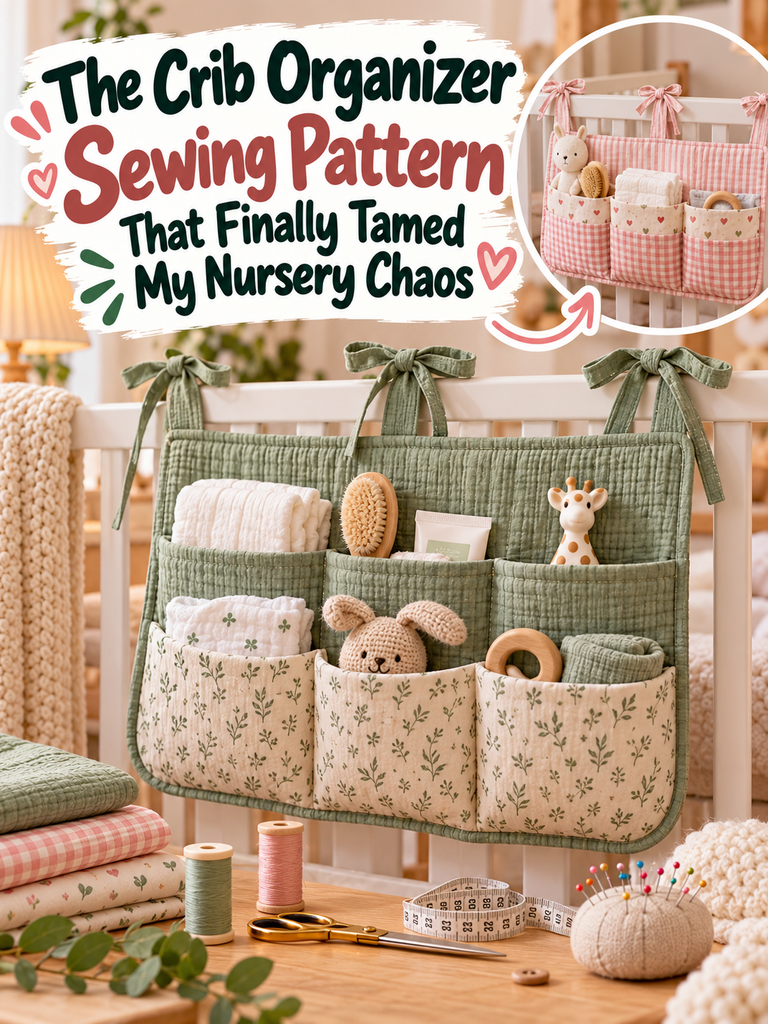
Take a look at the photos and you’ll notice the details right away. The design uses a wide, softly rounded panel with pockets stacked in two tiers. Taller pockets sit behind shorter ones, so you get more storage without the organizer looking bulky.
That layered layout is smart. Tall items like folded wipes or a hairbrush go in the back pockets. Smaller things, like a teether or a tube of balm, tuck into the front ones where you can grab them quickly.
Then there are the ties. Instead of hard hooks or snaps, the organizer hangs from fabric loops tied in little bows over the top rail. It’s a small touch, but it gives the whole piece a gentle, handmade charm (and it means you can adjust or remove it in seconds).
The pattern comes as a PDF sewing pattern, so you can download it, print it at home and start cutting the same day. No waiting on the mail.
Two Looks, Endless Possibilities
The pattern photos show two very different moods, and I love that they prove how versatile this design is.
The first version is all calm and natural: a soft sage green with that slightly crinkled texture you get from double gauze or washed muslin. Paired with light wood and white bedding, it feels serene and modern. It’s perfect for a gender-neutral nursery.
The second is pure sweetness. A blush pink gingham body, a fine striped back panel and pocket tops in a tiny heart print. Mixing three coordinated fabrics like this is where you can really have fun.
Want my honest advice? Pull fabrics from your stash first. Small prints and leftover quilting cottons are ideal here, and using scraps you already love makes the finished piece feel even more personal.
Choosing the Right Fabric
Fabric choice makes or breaks a project like this, so let’s talk about it for a second.
- Double gauze or muslin: Breathable, soft and wonderfully textured. Prewash it, because it shrinks and gets even softer.
- Quilting cotton: Easy to cut, easy to sew and comes in endless prints. A great pick if you’re newer to sewing.
- Linen or linen blends: Gives a relaxed, natural look with a bit more body.
One tip that many sewists learn the hard way: give the pockets some structure. A light fusible interfacing or a layer of batting helps them hold their shape once they’re filled with diapers. Otherwise they can sag and look tired after a few weeks.
Sewing Tips for a Polished Finish
You don’t need fancy skills to make this look professional. A few habits go a long way:
- Prewash everything. Baby items get washed constantly, so shrink the fabric before you sew, not after.
- Press as you go. Crisp seams around those curved corners are what make the finished piece look store-bought (in the best way).
- Clip your curves. Small notches in the seam allowance help the rounded edges turn out smooth instead of lumpy.
- Topstitch the pocket dividers firmly. These lines carry the weight, so backstitch at the top where the stress is highest.
- Double-stitch the ties. They hold everything up, so attach them securely.
How to Sew a Crib Organizer: Step by Step
Want to see how it all comes together? Here’s a simple method for a three-column organizer with two tiers of pockets and bow ties. It’s a general walkthrough, not the pattern’s official instructions, so if you buy the Cheri Demeter pattern, follow its pieces and measurements. Finished size is roughly 60 × 35 cm (about 23.5 × 14 inches).
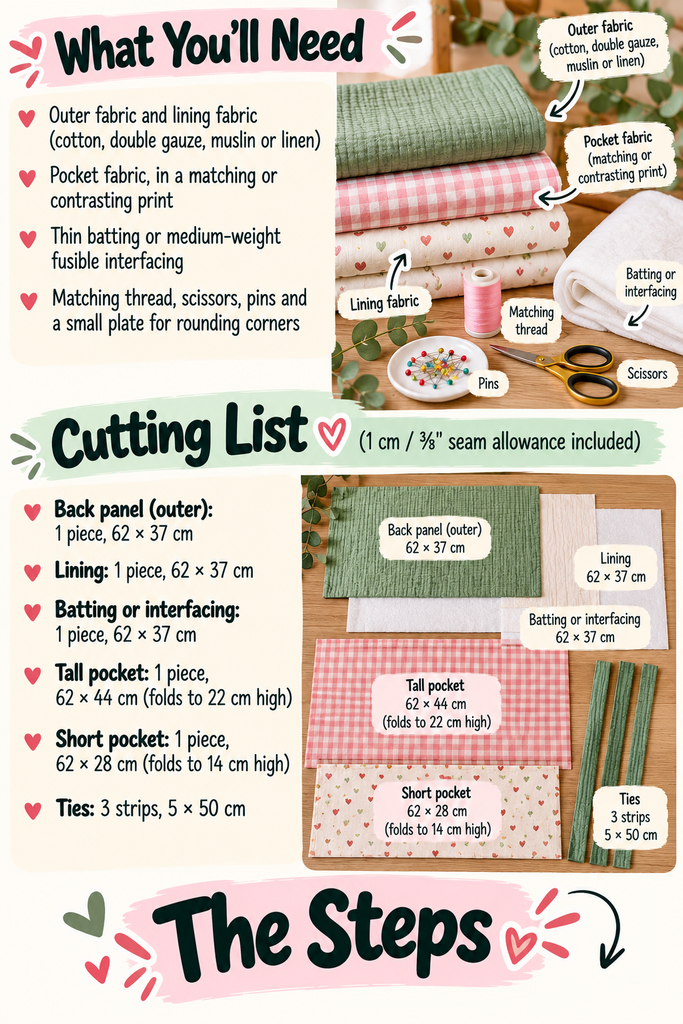
What You’ll Need
- Outer fabric and lining fabric (cotton, double gauze, muslin or linen)
- Pocket fabric, in a matching or contrasting print
- Thin batting or medium-weight fusible interfacing
- Matching thread, scissors, pins and a small plate for rounding corners
Cutting List (1 cm / ⅜” seam allowance included)
- Back panel (outer): 1 piece, 62 × 37 cm
- Lining: 1 piece, 62 × 37 cm
- Batting or interfacing: 1 piece, 62 × 37 cm
- Tall pocket: 1 piece, 62 × 44 cm (folds to 22 cm high)
- Short pocket: 1 piece, 62 × 28 cm (folds to 14 cm high)
- Ties: 3 strips, 5 × 50 cm
The Steps
- Prewash and press. Double gauze and muslin shrink a lot, so get that out of the way before cutting.
- Make the ties. Fold both long edges of each strip to the center, then fold in half again so the tie is about 1.2 cm wide. Tuck the ends in and stitch along the open edge.
- Prep the pockets. Fold each pocket piece in half lengthwise, wrong sides together, and press. Topstitch 0.5 cm from the fold. That fold becomes the pocket opening.
- Layer it up. Fuse the interfacing to the back of the outer panel, or lay the batting underneath it. Place the tall pocket on top with bottom edges aligned, then the short pocket over it. Baste the sides and bottom 0.5 cm from the edge.
- Stitch the dividers. Mark vertical lines 20 cm and 40 cm from one side. Sew down each line from the top of the tall pocket to the bottom edge, backstitching firmly at the top where the strain is greatest. For the puffy look in the photos, fold a small 1 cm pleat at the bottom of each pocket before basting.
- Round the corners. Trace around a small plate at the two bottom corners and trim all layers. Cut the lining to match.
- Attach the ties. Fold each tie in half and pin the fold at the top edge: one 5 cm in from each side and one in the center, with the loose ends pointing down toward the middle. Baste in place.
- Add the lining. Place the lining on top, right sides together. Sew all the way around, leaving a 12 cm gap along the top edge. Clip notches into the curves without cutting the stitching.
- Turn and press. Turn the organizer right side out through the gap, gently push out the corners and press well.
- Topstitch to finish. Stitch 0.5 cm from the edge all the way around. This closes the turning gap and gives a crisp, professional edge.

Shortcut option: Skip the bag-out lining. Layer the lining wrong sides together with the front and finish the edges with bias binding, like the pink version in the photos.
A Quick but Important Word on Safety
I’d be doing you a disservice if I skipped this part. Safe sleep guidance recommends keeping a baby’s sleep space clear of soft objects, so hang your organizer on the outside of the crib rail, facing out toward you, not toward the mattress.
Keep the ties short and knotted firmly, and check the stitching now and then. Once your little one starts pulling up to stand, it’s time to move the organizer somewhere out of reach, like the side of a changing table or dresser. It works beautifully there too.
Beyond the Crib: More Ways to Use It
What I find really clever about this design is how easily it adapts. The same organizer can hang from:
- A changing table, holding creams and diapers right where you change them
- A toddler bed or bunk bed, for books and a favorite plush
- The side of a sofa or armchair, for remote controls and reading glasses
- A stroller handle or play yard, for outings and visits to grandma
So it doesn’t retire when your baby outgrows the crib. It just finds a new job.
The Perfect Handmade Baby Gift
If you’ve got a baby shower coming up, this might be your answer. Handmade gifts that are also genuinely useful are rare. Most new parents receive a mountain of tiny outfits, but practical, beautiful storage? That’s the gift they’ll actually thank you for at 3 a.m.
Fill the pockets with a few extras before you wrap it: a pack of washcloths, a soft brush, a little plush bunny. It turns a sweet sewing project into a complete, thoughtful present.
Final Thoughts
Remember that midnight hunt for the burp cloth? With a crib organizer hanging right at your fingertips, that moment gets a whole lot easier. Everything has its place, the room looks calmer, and you’ve made something with your own hands that you’ll use every single day.
The Crib Organizer Sewing Pattern by Cheri Demeter Patterns strikes that lovely balance between practical and pretty. It’s simple enough to finish in a weekend, flexible enough to match any nursery style, and charming enough to become a keepsake.
Your Turn
Are you sewing for your own nursery or making a gift for someone special? Which look are you drawn to: the calm sage green or the sweet pink gingham with hearts? Tell me in the comments, and if you make one, share a photo. I’d genuinely love to see your fabric combinations.
Ready to start? Grab the Crib Organizer PDF Sewing Pattern from Cheri Demeter Patterns, pull out your favorite fabrics, and give your nursery the little bit of order it deserves.